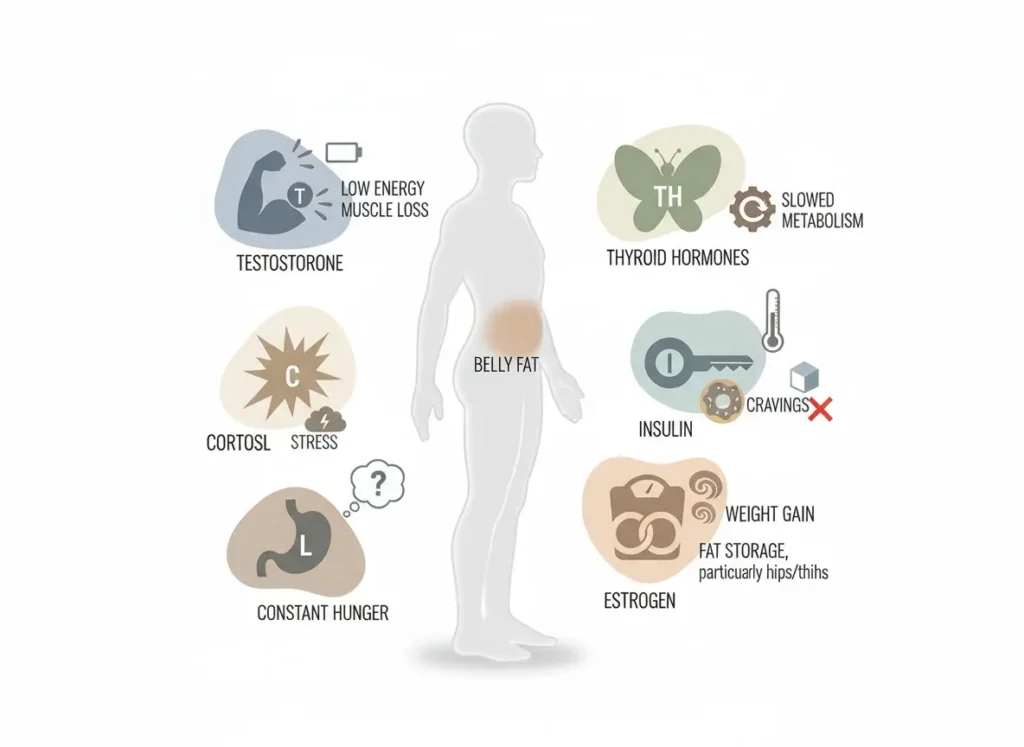
Why Your Weight Loss Has Stalled: Hidden Hormonal Reasons

Quick Answer

Weight loss can stall even when diet and exercise stay consistent because hormones affect metabolism, appetite, insulin response, muscle retention, stress levels, and fat storage. When progress stops for weeks despite good habits, an underlying hormonal issue may be part of the reason.

You are eating well. You are working out. The scale has not moved in weeks.

This is not a discipline problem. It is a biology problem. And for a significant number of people, the biology at the center of it is hormonal.

Weight loss plateaus are common and well-documented. What is less understood is why some people hit them early, why they last longer than they should, and why standard advice to eat less and move more stops working. The answer, in many cases, sits in the hormonal systems that control how your body burns fat, stores energy, reads hunger signals, and responds to stress.

This guide explains the specific hormonal mechanisms behind weight loss stalls, how to identify which ones are working against you, and what Tucson Wellness MD offers for people whose plateaus are rooted in measurable hormonal deficiency.

Why Weight Loss Stops: The Biological Reality

When you reduce calories and lose weight, your body adapts. Metabolic rate drops. Hunger hormones increase. Fat storage becomes more efficient. These are not failures. They are survival responses built into human physiology.

The problem is that these adaptations hit some people harder than others. Age, hormonal status, sleep quality, stress load, and underlying conditions all determine how aggressively your body fights back against weight loss. For people with hormonal imbalances, the body’s defense mechanisms are amplified, making plateaus longer and harder to break without addressing the underlying cause.

The Hormones Most Responsible for Weight Loss Plateaus

Testosterone

Testosterone is not just a sex hormone. It is a metabolic hormone. It drives muscle protein synthesis, regulates fat distribution, and directly influences how efficiently your body burns calories at rest.

As testosterone declines, muscle mass decreases. Less muscle means a lower resting metabolic rate, which means your body burns fewer calories doing the same activities it always did. At the same time, low testosterone promotes visceral fat accumulation, particularly around the abdomen. That fat tissue then converts testosterone into estrogen through aromatization, which suppresses testosterone further. The cycle compounds itself.

Men over 30 lose approximately 1% of their testosterone per year. Women also produce testosterone and experience hormonal decline, particularly during perimenopause and menopause. Both groups are vulnerable to the plateau pattern that low testosterone creates, and both can benefit from assessment and, when appropriate, hormonal treatment.

If your plateau includes increased belly fat, reduced muscle despite consistent training, low energy, and poor recovery, low testosterone is a strong candidate for investigation.

Cortisol

Cortisol is the body’s primary stress hormone. In short bursts it is essential. Chronically elevated, it becomes one of the most effective fat storage signals the body has.

High cortisol increases appetite, specifically cravings for high-calorie, high-carbohydrate foods. It drives fat deposition toward the abdomen. It breaks down muscle tissue to release glucose. It suppresses thyroid function, which slows metabolism. It disrupts sleep, which then drives cortisol higher the following day.

Chronic stress, whether from work, sleep deprivation, under-eating, or overtraining, keeps cortisol elevated and weight loss stalled. People who exercise excessively without adequate recovery are particularly prone to this. The effort they put in keeps cortisol high, which undermines the fat loss they are working toward.

Thyroid hormones

The thyroid gland controls metabolic rate. When thyroid hormone output drops, every metabolic process slows: calorie burning at rest, digestive efficiency, energy production, and fat mobilization.

Hypothyroidism is underdiagnosed because its symptoms overlap with other conditions. Persistent fatigue, cold intolerance, dry skin, hair thinning, constipation, and unexplained weight gain despite calorie restriction are all classic signs. Women are significantly more likely than men to develop thyroid dysfunction, but men are not immune.

Even subclinical hypothyroidism, where lab values fall within the technically normal range but not the optimal range, can impair weight loss. This is one reason why standard lab interpretation sometimes misses the underlying cause of a plateau.

Insulin and insulin resistance

Insulin is the hormone that signals cells to absorb glucose from the bloodstream. When cells become resistant to that signal, glucose stays in the blood, the pancreas produces more insulin, and chronically elevated insulin tells the body to store fat rather than burn it.

Insulin resistance does not require a diabetes diagnosis to stall weight loss. It exists on a spectrum, and even moderate resistance makes fat mobilization significantly harder. Diets high in refined carbohydrates, poor sleep, physical inactivity, and excess body fat all drive insulin resistance. It is also a common downstream consequence of low testosterone and elevated cortisol, meaning these hormonal disruptions often arrive together rather than in isolation.

Leptin and ghrelin

Leptin signals the brain that you have enough energy stored and should stop eating. Ghrelin signals hunger and drives you to seek food. In a functioning system, these two hormones balance each other. In a weight loss plateau, the balance breaks.

As body fat decreases, leptin levels fall, which removes the satiety signal. Simultaneously, ghrelin increases, making you hungrier than you were before you started losing weight. Your brain interprets the lower leptin as a threat to survival and fights back with increased appetite, reduced energy expenditure, and stronger food-seeking behavior.

This is not willpower failure. It is a documented hormonal response to caloric restriction. It explains why plateaus feel so much harder to push through than the initial weight loss phase.

Non-Hormonal Factors That Amplify Hormonal Plateaus

Hormones do not operate in isolation. These factors interact directly with the hormonal systems above and turn manageable stalls into extended plateaus.

Sleep deprivation

Poor sleep elevates cortisol, suppresses testosterone, increases ghrelin, and reduces leptin. Consistently sleeping fewer than seven hours per night disrupts every hormonal system relevant to weight management simultaneously. People who fix their sleep quality often see weight loss resume without any other intervention.

Sedentary lifestyle

Muscle mass is the primary driver of resting metabolic rate. People who lose weight through diet alone without resistance training lose both fat and muscle, which drops their metabolic rate and makes subsequent weight loss harder. Strength training preserves muscle during a caloric deficit and maintains the metabolic rate that keeps fat loss moving.

Metabolic adaptation

As body weight decreases, the body requires fewer calories to maintain that lower weight. This is physiological, not psychological. The body also reduces non-exercise activity thermogenesis (NEAT), the unconscious physical activity like fidgeting and postural adjustments, to conserve energy. Total daily calorie burn can drop significantly without any change in the exercise routine.

Medications

Several commonly prescribed medications interfere with weight loss or cause weight gain as a side effect. These include some antidepressants, beta-blockers, corticosteroids, and certain antihistamines. If a plateau began around the time a medication was added, this connection is worth raising with your provider.

How to Know if Hormones Are Behind Your Plateau

Suspecting a hormonal cause is not enough. You need data. The following symptoms, particularly in combination, point toward a hormonal rather than purely behavioral plateau:

Fatigue that does not improve with adequate sleep. Belly fat accumulation despite calorie control. Muscle loss alongside fat that is not responding. Low mood, reduced motivation, and brain fog. Cold intolerance and slow digestion. Loss of libido or sexual function. Poor recovery from exercise.

These symptoms do not confirm a hormonal problem on their own, but they are strong indicators that lab work is warranted. A blood panel measuring testosterone, estradiol, thyroid function (TSH, free T3, free T4), fasting insulin, and cortisol gives you an objective picture of what is driving the stall.

How Tucson Wellness MD Addresses Hormonal Weight Loss Plateaus

At Tucson Wellness MD, we do not approach weight loss as a calorie math problem. We approach it as a system problem, where the hormonal environment determines whether the effort you are putting in produces the results you are working toward.

Our assessment begins with comprehensive lab work. We look at total and free testosterone, estradiol, thyroid markers, metabolic markers, and fasting insulin. We review your symptoms alongside your numbers because optimal ranges and clinical ranges are not always the same thing.

For men and women with confirmed hormonal deficiency, we offer testosterone replacement therapy that restores the metabolic and compositional conditions the body needs for fat loss to resume. For patients with weight loss resistance tied to appetite dysregulation and insulin signaling, semaglutide and other GLP-1 therapies address the hunger and glucose side of the equation. We also offer peptide therapies that support growth hormone release, muscle preservation, and metabolic function.

We treat the hormonal root cause, not the surface symptom. That is the difference between breaking a plateau and managing it indefinitely.

Frequently Asked Questions

How do I know if my weight loss plateau is hormonal? The clearest indicator is the symptom picture alongside the plateau. If you have fatigue, belly fat accumulation, muscle loss, low mood, poor recovery, or low libido alongside a stall in weight loss, get labs done. Symptom suspicion without data is not a diagnosis.

Can fixing hormones alone restart weight loss? For some patients with significant hormonal deficiency, yes. Restoring testosterone to optimal levels, for example, often improves body composition measurably even before other changes are made. In most cases, hormonal treatment works best alongside nutritional support and resistance training.

How long does a hormonal plateau typically last without intervention? Indefinitely, in some cases. Hormonal deficiencies do not self-correct with more effort. If low testosterone or thyroid dysfunction is driving the stall, the plateau will persist until those underlying conditions are addressed.

Is semaglutide appropriate for a weight loss plateau? For patients whose plateau is driven by appetite dysregulation, insulin resistance, or excess body weight, yes. Semaglutide addresses the GLP-1 signaling pathway that controls hunger and glucose metabolism. It is most effective as part of a supervised program that includes hormonal assessment.

What labs should I get to investigate a hormonal plateau? At minimum: total testosterone, free testosterone, estradiol, TSH, free T3, free T4, fasting insulin, and a basic metabolic panel. Your provider at Tucson Wellness MD will determine the appropriate panel based on your symptom history.

GLP-3 Explained: Triple-Agonist Weight-Loss Drugs

When people search for “GLP-3,” they are usually referring to a new class of triple-agonist weight-loss medications.

There is no human hormone called GLP-3.

The term is internet shorthand for drugs designed to activate three metabolic receptors at the same time:

  • GLP-1
  • GIP
  • Glucagon

The most advanced example in this category is retatrutide, which is currently investigational and not FDA-approved.

Quick Overview

  • “GLP-3” is not a real hormone.
  • It typically refers to triple-agonist drugs targeting GLP-1, GIP, and glucagon receptors.
  • Retatrutide is the leading triple-agonist candidate in development.
  • In phase 2 clinical trials, the highest dose of retatrutide produced about 24 percent average weight loss at 48 weeks.
  • Retatrutide is still in clinical trials and not FDA-approved.

What Triple-Agonist Drugs Do

Triple-agonists are designed to stimulate three metabolic pathways simultaneously.

GLP-1 Receptor

  • Reduces appetite
  • Slows stomach emptying
  • Improves post-meal glucose control

This pathway is already used in approved medications such as semaglutide.

GIP Receptor

  • Influences insulin signaling
  • Works alongside GLP-1 to regulate appetite and metabolism

This pathway is part of tirzepatide’s mechanism.

Glucagon Receptor

  • May increase energy expenditure
  • Influences fat metabolism

Adding glucagon receptor activity is what distinguishes triple-agonists from dual-agonists.

The goal of combining all three is greater weight loss and broader metabolic effects.

What Research Shows So Far

In a phase 2 clinical trial in adults with obesity:

  • The highest dose of retatrutide led to approximately 24 percent average weight loss at 48 weeks.
  • Participants were still losing weight at the end of the study period.
  • Cardiometabolic markers such as blood pressure and lipids improved.
  • Many individuals with prediabetes returned to normal glucose levels.

These results are promising. However, they come from phase 2 trials. Larger phase 3 trials are ongoing.

Retatrutide remains investigational.

Side Effects Observed in Trials

The side effect pattern is similar to GLP-1-based medications.

Common Side Effects

  • Nausea
  • Vomiting
  • Diarrhea
  • Constipation

These symptoms were generally dose-related and more common during dose increases.

Heart Rate

Modest increases in resting heart rate were observed.

Gradual dose escalation was associated with better tolerability.

Comparison With Current Approved Medications

Here is a simplified overview based on published trial data.

GLP-1 Only (Example: Semaglutide 2.4 mg)

  • Mechanism: GLP-1 receptor activation
  • Reported average weight loss: Around 15 percent at 68 weeks
  • FDA-approved

Dual GIP/GLP-1 (Example: Tirzepatide)

  • Mechanism: GIP + GLP-1 receptor activation
  • Reported average weight loss: Up to about 22 percent at 72 weeks
  • FDA-approved

Triple GLP-1/GIP/Glucagon (Example: Retatrutide)

  • Mechanism: GLP-1 + GIP + glucagon receptor activation
  • Reported average weight loss: Up to about 24 percent at 48 weeks
  • Investigational

These numbers come from separate trials and are not direct head-to-head comparisons.

Regulatory Status and Access

Retatrutide is:

  • In phase 3 clinical trials
  • Not FDA-approved
  • Only available through clinical trials

Consumers should avoid products marketed online as retatrutide outside research settings. Counterfeit and unregulated products pose serious safety risks.

Body Composition During Weight Loss

Large weight loss from any method includes both:

  • Fat mass
  • Lean tissue

Research on GLP-1–based medications shows lean tissue can represent roughly 25–40 percent of total weight lost without resistance training and adequate protein intake.

This highlights the importance of:

  • Strength training
  • Adequate protein
  • Medical monitoring

The number on the scale does not tell the whole story.

Bottom Line

“GLP-3” refers to triple-agonist medications like retatrutide that target GLP-1, GIP, and glucagon receptors.

Early clinical trials show substantial weight loss potential. However, retatrutide is not FDA-approved and remains investigational.

Weight-loss medications should always be considered within a comprehensive plan that includes:

  • Nutrition
  • Resistance training
  • Medical supervision
  • Monitoring of body composition

If you are exploring advanced weight-loss therapies, consult a qualified healthcare provider to determine what is appropriate for your health profile.

Semaglutide vs. Tirzepatide

Quick Answer: Semaglutide vs. Tirzepatide — Which Is Better for Weight Loss?

Both are effective once-weekly injectable weight loss medications. Semaglutide (Ozempic/Wegovy) activates one hormone pathway (GLP-1) and produces average weight loss of 10–15%. Tirzepatide (Mounjaro/Zepbound) activates two pathways (GLP-1 and GIP) and produces average weight loss of 15–20%. Tirzepatide shows stronger results in clinical trials, but the right choice depends on your health history, goals, and insurance coverage.

Injectable medications such as semaglutide and tirzepatide have changed how doctors approach medical weight loss. These treatments help control appetite, regulate blood sugar, and support meaningful weight reduction when combined with healthy lifestyle changes. Both medications are taken as once-weekly injections and have produced strong results in clinical studies. However, they work through slightly different mechanisms, and one option may be more suitable depending on your health history, goals, and response to treatment.

How Semaglutide Works for Weight Loss

Semaglutide belongs to a group of medications called GLP-1 receptor agonists. It mimics a natural hormone in the body known as GLP-1, which plays a key role in appetite regulation and blood sugar control.

By activating GLP-1 receptors, semaglutide helps:

• Reduce hunger and cravings
• Slow stomach emptying
• Increase feelings of fullness after eating
• Improve blood sugar regulation

These effects help many people eat less without constantly feeling hungry.

Semaglutide was originally developed to treat Type 2 diabetes and is now widely used for weight management. Common brand names include Ozempic, Wegovy, and Rybelsus.

How Tirzepatide Works: Dual-Hormone Weight Loss Mechanism

Tirzepatide works in a slightly different way. Instead of targeting one hormone pathway, it activates two.

It stimulates both:

• GLP-1 receptors
• GIP receptors

This dual-hormone action improves blood sugar control while also helping regulate appetite and metabolism. Because it affects two metabolic pathways, tirzepatide may produce stronger appetite suppression and weight loss for some individuals.

Tirzepatide is available under brand names such as Mounjaro and Zepbound.

Weight Loss Results in Clinical Trials

Both medications have demonstrated significant weight loss in research studies.

Semaglutide Results

Clinical trials show that patients using semaglutide for weight management lose an average of about 10–15 percent of their body weight over the course of a year. For many people, this level of weight reduction leads to meaningful improvements in health markers such as blood sugar, blood pressure, and cholesterol.

Tirzepatide Results

Studies of tirzepatide have reported average weight loss ranging from about 15–20 percent of body weight in many participants. Some higher-dose trials have shown even greater results. Because tirzepatide targets two hormone pathways, it may provide slightly stronger weight loss effects in certain individuals.

Dosage and Administration

Both semaglutide and tirzepatide are administered once per week through a small injection under the skin.

Semaglutide

Semaglutide treatment typically begins with a lower dose that gradually increases over time. This gradual adjustment helps the body adapt and reduces the likelihood of side effects. Your provider will determine the appropriate dosing schedule based on your response to treatment.

Tirzepatide

Tirzepatide also uses a step-up dosing approach. The medication is slowly increased over time to help improve tolerance while maximizing effectiveness. This flexibility allows providers to tailor treatment to each patient’s progress and goals.

Side Effects

Because both medications affect appetite and digestion, they share similar side effect profiles.

Common Side Effects

The most common side effects include:

• Nausea
• Vomiting
• Diarrhea
• Constipation
• Reduced appetite

These symptoms most often occur during the early stages of treatment or when the dose increases. Many patients notice that these effects improve over time as the body adjusts. Some individuals taking tirzepatide may experience slightly higher rates of nausea due to its dual-hormone action, though this varies from person to person.

Cost and Insurance Coverage

The cost of these medications depends largely on insurance coverage.

Semaglutide

Wegovy is approved specifically for weight loss. Some insurance plans cover it for obesity treatment, although coverage varies widely. Without insurance coverage, the medication can be expensive.

Tirzepatide

Tirzepatide was initially approved for diabetes treatment, and insurance plans may be more likely to cover it for patients with Type 2 diabetes. Coverage for weight loss treatment varies depending on the insurance provider. Patients should verify coverage with their insurance plan before beginning treatment.

Semaglutide vs. Tirzepatide: Which Is Right for You?

There is no single medication that is best for everyone.

Semaglutide may be a good option if you:

• Prefer a single hormone pathway treatment
• Have previously responded well to GLP-1 medications
• Want a well-established weight loss therapy

Tirzepatide may be a better option if you:

• Need stronger appetite suppression
• Have Type 2 diabetes along with weight concerns
• Want a dual-hormone metabolic approach

Both medications are effective tools when prescribed and monitored by a qualified healthcare provider.

Lifestyle Still Matters

Even the most advanced medications work best when paired with healthy habits. Successful weight management typically includes balanced nutrition, regular physical activity, strength training to preserve muscle, and long-term lifestyle improvements. Medication can support weight loss, but lasting results come from building sustainable habits.

Medical Weight Loss in Tucson: Start with a Consultation at TWMD

Semaglutide and tirzepatide are among the most effective injectable treatments currently available for medical weight loss. Both medications help reduce appetite, improve metabolic health, and support meaningful weight reduction.

The right treatment depends on your medical history, weight loss goals, and how your body responds to therapy.

At Tucson Wellness MD (TWMD), our medical team carefully evaluates each patient to determine the most appropriate weight management plan. If you are considering semaglutide or tirzepatide, a consultation with TWMD can help you understand your options and create a personalized strategy for safe and effective weight loss.

Retatrutide: How to Get It and What to Know Before Starting

If you are researching how to get retatrutide, you are likely already familiar with its growing reputation in medical weight management.

Retatrutide is an investigational peptide currently being studied in clinical trials for its potential role in metabolic and weight management research.

Below is what retatrutide is, how it works, how it compares to other options, and how treatment begins at Tucson Wellness MD.

Quick answer

How do you get retatrutide?

Retatrutide is an investigational peptide not available through standard pharmacies or without medical oversight. At Tucson Wellness MD, the process starts with a consultation where a licensed provider reviews your medical history, metabolic factors, and weight loss goals to determine whether retatrutide is appropriate for you. If you qualify, a personalized dosing protocol is created and monitored throughout treatment. It is not a self-start medication.

What Is Retatrutide?

Retatrutide is an investigational peptide being evaluated in clinical research for its effects on metabolic pathways related to weight regulation. It is classified as a triple-agonist because it activates three hormone receptors involved in metabolism and appetite regulation:

  • GLP-1
  • GIP
  • Glucagon

Most existing weight loss medications target one or two of these pathways. Retatrutide works on all three, which is why Early clinical trials are evaluating its effects on weight and metabolic markers.

Clinical studies have reported changes in body weight under controlled research conditions. Outcomes in real-world settings may differ especially when treatment was medically supervised.

How Retatrutide Works in the Body

Retatrutide influences appetite, insulin regulation, and energy use at the same time.

Its receptor activity is being studied for its potential role in appetite regulation, metabolic signaling, and energy balance.

This multi-pathway approach is what separates retatrutide from earlier medications like semaglutide.

How to Start Retatrutide Treatment at Tucson Wellness MD

Retatrutide is not a self-start medication. Proper screening and medical oversight matter.

Step 1: Medical Consultation

Your visit begins with a consultation with a licensed medical provider. We review:

  • Medical history
  • Current medications
  • Weight loss challenges
  • Metabolic and hormonal factors

This step determines whether retatrutide is appropriate or if another option may be safer or more effective.

Step 2: Personalized Treatment Plan

If you are a candidate, your provider creates a treatment plan tailored to your body and goals. Dosing starts conservatively and is adjusted over time based on tolerance and response.

If prescribed, treatment is managed with structured medical oversight similar to other metabolic therapies.

Step 3: Ongoing Monitoring and Support

Weight loss is not a one-visit process. We monitor progress, side effects, and metabolic markers throughout treatment to ensure safety and sustainability.

Why Choose Tucson Wellness MD for Retatrutide?

At Tucson Wellness MD, weight loss treatments are managed as medical care, not trends.

Our approach includes:

  • One-on-one provider oversight
  • Individualized dosing protocols
  • Alternative options if retatrutide is not the best fit
  • Long-term metabolic and lifestyle support

Our goal is not rapid weight loss at any cost. It is safe, steady improvement that can be maintained.

Retatrutide Compared to Other Weight Loss Peptides

Retatrutide vs Semaglutide

Semaglutide works by activating the GLP-1 receptor, which helps control appetite and blood sugar. Retatrutide activates three receptors, offering broader metabolic support and potentially greater fat loss.

Retatrutide vs Tirzepatide

Tirzepatide activates GLP-1 and GIP. Retatrutide adds glucagon receptor activity, which may further enhance fat burning and energy use. Some patients respond better to one option than another based on tolerance and metabolic profile.

Who May Be a Good Candidate for Retatrutide?

Retatrutide may be considered for adults who:

  • Have overweight or obesity
  • Struggle with insulin resistance or metabolic dysfunction
  • Have not achieved desired results with lifestyle changes alone
  • Want structured medical guidance and monitoring

Your provider will help determine whether retatrutide or another therapy is the best option for you.

Final Thoughts on Retatrutide

Retatrutide is part of ongoing research in metabolic medicine. It is being studied for its multi-receptor activity and how it may influence metabolic signaling.

However, success depends on proper evaluation, dosing, and ongoing medical supervision.

If you are ready to explore whether retatrutide is appropriate for you, the team at Tucson Wellness MD is here to guide you through the process safely and responsibly.

FAQs: Retatrutide

How does retatrutide differ from semaglutide?
Retatrutide activates three metabolic pathways, while semaglutide activates one. Individual responses to investigational therapies vary and depend on multiple clinical factors.

Is retatrutide better than tirzepatide?
Retatrutide targets an additional receptor. Some patients respond better to one medication than the other depending on tolerance and metabolic response.

How much weight can someone lose on retatrutide?
Clinical trials have reported weight changes under controlled study conditions. Individual results vary and investigational therapies are not guaranteed to produce specific outcomes.

How soon do results appear?
Timelines and responses vary between individuals. Ongoing monitoring is necessary during treatment especially with proper medical support.

Are there side effects?
Possible side effects include nausea, digestive discomfort, or fatigue, especially during dose escalation. Most effects are temporary and manageable under supervision.

Is medical monitoring necessary?
Yes. Retatrutide affects metabolic and hormonal pathways and should only be used with provider oversight.

Understanding Retatrutide Dosage: A Comprehensive Guide

What is the correct retatrutide dosage?

Retatrutide dosage typically starts at a low weekly injection and is gradually increased over time under medical supervision. The exact dose depends on your response, tolerance, and weight loss goals.

Navigating the world of weight loss medication can feel overwhelming, especially with the rapid evolution of pharmaceutical options. While many patients have found success with current treatments, others still face stubborn plateaus or desire more significant metabolic changes. Enter Retatrutide, a groundbreaking advancement in obesity treatment that is reshaping our understanding of medical weight management.

At Tucson Wellness MD, we believe in utilizing the most advanced, science-backed therapies to help you reach your peak health. Retatrutide represents the next generation of metabolic support, offering a potent solution for those seeking substantial results. In this guide, we will break down the mechanics of this medication, explain how a proper Retatrutide dose protocol works, and help you determine if this triple-agonist therapy is the right next step for your wellness journey.

Why Choose Retatrutide for Obesity Treatment?

Retatrutide is quickly gaining attention not just for its mechanism of action, but for the profound results seen in clinical settings. For patients at Tucson Wellness MD, this medication offers several distinct advantages over previous options:

Superior Weight Reduction 

Clinical data suggests that Retatrutide may yield higher percentages of body weight loss compared to dual-agonist medications, making it a powerful tool for significant obesity treatment.

Liver Health Support

The inclusion of the glucagon receptor agonist has shown promise in reducing liver fat, which is crucial for overall metabolic health and longevity.

Breaking Plateaus

For patients who have stalled on other therapies, the triple-agonist mechanism provides a new metabolic stimulus to restart weight loss.

Improved Lipid Profiles

Beyond just the scale, Retatrutide helps improve blood pressure and cholesterol levels, contributing to better heart health.

Navigating Your Retatrutide Dose and Administration

Effective weight loss medication requires precision. Proper medication administration is vital to maximizing benefits while minimizing potential side effects. At Tucson Wellness MD, we do not believe in a “one-size-fits-all” approach; instead, we follow a careful titration schedule.

Your Retatrutide dose typically begins at a lower level to allow your body to adapt to the hormonal changes. Over several weeks or months, the dosage is gradually increased under strict medical supervision until a therapeutic maintenance dose is reached. This slow ramp-up helps mitigate common gastrointestinal sensitivities. Because this is a powerful injectable therapy, our team ensures you are fully educated on proper injection techniques and storage. We monitor your progress closely, adjusting your plan based on your side effect profile and weight loss velocity to ensure safety and efficacy.

Conclusion

Retatrutide represents the cutting edge of obesity treatment, offering a powerful new option for those seeking significant and sustained weight loss. By harnessing the power of a GLP-1, GIP, and glucagon receptor agonist simultaneously, this medication helps your body burn fat more efficiently than ever before. However, the key to success lies in a personalized Retatrutide dose strategy managed by experienced professionals.

At Tucson Wellness MD, we are dedicated to guiding you through this process with safety and precision. We combine advanced medical therapies with holistic lifestyle support to ensure your results last a lifetime. If you are ready to take control of your metabolic health, contact us today to schedule your consultation and see if Retatrutide is right for you.

Frequently Asked Questions About Retatrutide

What is retatrutide and how is it different from semaglutide or tirzepatide? Retatrutide is a triple agonist that simultaneously activates GLP-1, GIP, and glucagon receptors. Semaglutide targets GLP-1 only. Tirzepatide targets GLP-1 and GIP. The addition of the glucagon receptor agonist in retatrutide actively increases energy expenditure alongside appetite suppression, which is the primary mechanistic distinction and the basis for its stronger weight loss results in clinical trials.

Is retatrutide FDA-approved? No. As of 2026, retatrutide is not FDA-approved for any indication. It is currently advancing through Phase 3 clinical trials for obesity treatment. Use in the United States occurs through investigational or compounding channels. Patients should discuss the current regulatory status and legal access with their physician before starting.

What weight loss results has retatrutide shown in clinical trials? Phase 2 trial data published in 2023 showed participants receiving the highest retatrutide dose lost an average of approximately 24 percent of body weight over 48 weeks, which exceeded results seen with dual-agonist medications in comparable timeframes. Phase 3 trials are ongoing and will provide more definitive efficacy and safety data.

What are the most common side effects of retatrutide? The most commonly reported side effects in clinical trials are gastrointestinal in nature, including nausea, vomiting, diarrhea, and constipation. These are consistent with the GLP-1 class and are most pronounced during dose escalation. A gradual titration schedule starting at a low dose significantly reduces their severity.

How is retatrutide dosed and administered? Retatrutide is administered as a subcutaneous injection on a weekly schedule. Treatment begins at a low starting dose and is titrated upward over several weeks or months under medical supervision until a therapeutic maintenance dose is reached. Dosing is individualized based on patient response, side effect profile, and weight loss progress. Tucson Wellness MD does not use a one-size-fits-all protocol.

Who is a good candidate for retatrutide? Retatrutide may be appropriate for patients with significant obesity, particularly those who have plateaued on GLP-1 or dual-agonist therapies, or those with concurrent metabolic concerns such as elevated liver fat or poor lipid profiles. A full medical evaluation including cardiovascular assessment and current medication review is required before starting. Not every patient is a suitable candidate.

How does Tucson Wellness MD supervise retatrutide treatment? Tucson Wellness MD provides baseline lab work and cardiovascular assessment before starting, a structured titration schedule with regular follow-up, monitoring of weight loss velocity and side effect profile, and adjustment of dosing based on individual response. Patients are fully educated on injection technique and medication storage before beginning treatment.

Mega Burn Vitamin Injections: Fuel Your Body and Support Your Weight Loss Journey

woman showing her belly fat

Maintaining a healthy body weight can be challenging, especially when stress, lack of sleep, and a slow metabolism make it harder to burn body fat. When you consume more calories than you burn, the excess energy often leads to weight gain. Over time, blood sugar spikes, processed foods, and poor lifestyle habits can add up, making fat loss feel out of reach.

At Tucson Wellness MD, we offer Mega Burn vitamin injections as a powerful tool to help you lose weight, burn fat, and improve overall health. By supporting fat burning and energy production, these injections can keep your weight loss goals on track while boosting mental clarity and physical performance.

How Mega Burn Supports Fat Burning

Your body burns calories by converting food into usable energy through mitochondria, the essential energy centers inside your cells. These organelles use amino acids and other nutrients to fuel muscles, tissues, and organs. When mitochondria are functioning efficiently, fat burning improves, and your body can use stored fat instead of holding onto it.

Mega Burn injections work by helping your body maximize fat loss and energy production. By targeting body fat directly, these injections enhance performance, improve stamina, and reduce fatigue so you feel stronger and more focused throughout the day.

The Role of Nutrition and Lifestyle in Weight Loss

fruits and veggies

Mega Burn works best when paired with a healthy diet and active lifestyle. Research suggests that simple dietary changes such as adding leafy greens, high fiber foods, whole grains, nuts, and healthy fats like olive oil can improve immune function, regulate hormones, and support appetite control.

Avoiding excessive alcohol, processed foods, and too much caffeine from coffee or other drinks also reduces stress on your body systems. Pairing these nutrition strategies with strength training, walking, and other forms of physical activity can help you stick to your weight loss goals, protecting valuable muscle mass while losing body fat.

Benefits Beyond Weight Loss

Mega Burn vitamin injections offer more than just fat loss. Patients report benefits that include:

  • Improved stamina and endurance during exercise
  • More energy for long hours of work or activity
  • Reduced fatigue and better rest at night
  • Enhanced mood, focus, and mental clarity
  • Support for immune function and overall health

Because the injections work on the cellular level, they provide nutrients directly to the body in a way that supports energy production, appetite regulation, and heart rate balance. This helps you maintain a more consistent lifestyle with fewer dips in energy and greater long-term results.

Personalized Care for Long-Term Success

couple exercising outside for burning some fat

Every patient’s weight loss journey is unique. Some may struggle with obesity or medical conditions that affect metabolism. Others may face challenges with exercise recovery, stress, or hormone regulation. That’s why at Tucson Wellness MD, we customize Mega Burn injections to your individual needs.

Our team will review your health history, lifestyle, and weight loss goals to design a program that works with your body. By combining injections with realistic strategies like reducing calorie intake, balancing nutrients, and building physical activity into your routine, you can lead a healthier lifestyle with lasting results.

Take the Next Step in Your Weight Loss Journey

If you’re ready to eat smarter, burn more calories, and boost your energy while protecting your overall health, Mega Burn vitamin injections may be the right supplement to support your progress.

Schedule a consultation with Tucson Wellness MD today to learn how this non-invasive treatment can help you lose weight, increase fat burning, and stay energized on your path to long-term wellness. Get started with a visit to our website.

7 Common Signs Your Metabolism Is Slowing Down (And What You Can Do About It)

Let’s review common signs associated with metabolic changes and practical steps that may help support metabolic health.

Why a Slow Metabolism Is Easy to Miss

Many people assume feeling tired, foggy, or stuck with their weight is normal aging, not realizing these are early signs their metabolism is no longer working efficiently. When the body struggles to convert food into energy, every system feels the slowdown.

Signs your Metabolism could be Slowing

We know understand that a slowed metabolism means your body is less efficient at converting the food you eat (calories) into usable energy than usual. Your metabolic rate is influenced by many factors including age, gender, muscle-to-fat ratio, amount of physical activity and hormone function.

1. Fatigue or Low Energy

You’re getting plenty of sleep, but you still feel drained. Sound familiar? When your metabolism slows, your cells aren’t producing energy efficiently. This can leave you feeling exhausted, unmotivated, and even foggy.  Changes in blood sugar regulation or thyroid function may contribute to these symptoms and should be evaluated by a healthcare provider when appropriate. As a result, you might experience increased cravings, particularly for sugary or starchy foods, as the body tries to get more energy. 

2. Unexplained Weight Gain or Difficulty Losing Weight

If your weight has crept up without any major changes in your habits, it could be metabolic. A slower metabolism burns fewer calories at rest, meaning even the same meals and activities might now lead to weight gain especially around the midsection. Hormonal and metabolic factors may influence weight patterns and should be assessed individually through proper testing and clinical evaluation. Chronic stress and poor sleep don’t help either.

lose weight

3. Cold Intolerance

Always reaching for a sweater, even in warm temps? Changes in thyroid hormone levels can influence temperature regulation and metabolic function, and evaluation may be appropriate if symptoms persist your internal temperature may drop. This is a common but often overlooked sign of a sluggish metabolism.

4. Constipation or Slower Digestion

Metabolism doesn’t just affect weight, it influences digestion too. A sluggish metabolism can result in slowed digestion, causing constipation, bloating, or other digestive issues. Reduced energy availability slows gut motility. If your gut is sluggish, it could be a sign that your entire system is slowing down. Supporting gut health with hydration, fiber, and fermented foods is key.

5. Brain Fog or Low Mood

managing stress

Poor memory, difficulty concentrating, or feeling down for no obvious reason? When your cells aren’t converting nutrients into usable energy efficiently, your brain suffers too.  These symptoms may be associated with fluctuations in blood sugar, cellular energy production, or nutrient status and warrant further clinical evaluation when ongoing.

6. Thinning Hair or Brittle Nails

Your hair and nails reflect your internal health. Thinning, shedding, or slow-growing hair could point to protein or micronutrient deficiencies, poor thyroid function, or stress. Your body prioritizes survival, not beauty, when resources are low.

7. Hormonal Irregularities

hormone weight gain

Irregular or missed periods, PMS, and low libido can all be signs of hormonal imbalance. Key hormones like estrogen, progesterone, and testosterone play a major role in your metabolic health, so when they’re off, your metabolism often is too. Thyroid hormones also regulate how your body uses glucose, burns fat, and stores energy so disruptions here can significantly impact your metabolic function.

What You Can Do About It

The good news? You have more control than you think. Here are simple, foundational steps to support a healthier, more efficient metabolism:

  • Eat enough – especially protein and healthy fats
  • Balance blood sugar with regular meals and real food
  • Strength train to support lean muscle and metabolic function
  • Move daily beyond the gym (walking, stretching, mobility)
  • Prioritize sleep and manage stress (this includes saying no and resting!)
  • Support your gut with fiber, fermented foods, and hydration
  • Get tested if needed: thyroid panel, sex hormones, nutrient status

Your metabolism is your body’s internal engine and just like a car, it needs the right fuel and maintenance to run well. If you’re noticing any of these signs, don’t ignore them. They may be gentle nudges from your body asking for more support.

Don’t Wait – Live Better Today!

By making intentional shifts to how you eat, move, sleep, and manage stress,You may support metabolic health and energy levels by making sustainable lifestyle adjustments and working with a qualified provider when needed, focused, and in control. Small steps really do make a big impact. Now is the time to start tuning in and taking action.  If you are experiencing persistent symptoms, scheduling a consultation with a licensed healthcare provider may help determine whether additional evaluation or testing is appropriate.

Frequently Asked Questions

What does it mean when your metabolism slows down?

A slowed metabolism means your body is less efficient at turning food into usable energy. This can affect weight, energy levels, digestion, temperature regulation, mood, and hormone balance.

Can metabolism really slow down even if my habits haven’t changed?

Yes. Metabolism can slow due to age, chronic stress, hormonal changes, under-eating, muscle loss, poor sleep, or thyroid dysfunction, even if your diet and activity stay the same.

Is weight gain always a sign of a slow metabolism?

Not always, but unexplained weight gain or difficulty losing weight can be a common sign. When metabolism slows, your body burns fewer calories at rest, making fat storage easier.

Understanding Body Composition: Lean Body Mass vs Muscle Mass

What is Lean Body Fat?

Lean body fat refers to the amount of fat your body carries relative to lean body mass, which includes muscle, bone, organs, and water. Lower body fat and higher lean mass are commonly associated with differences in physical appearance and metabolic function.

When it comes to tracking your health and fitness progress, the number on the scale only tells part of the story. That’s why body composition is so important, it helps you understand what your body is actually made of, beyond just weight.

But terms like lean body mass and muscle mass often get mixed up. Let’s break down what they really mean, with some real-world examples of how they show up in everyday life.

What is body composition?

Body composition refers to the proportions of fat, muscle, bone, water, and other tissues in your body.

Think of it this way:
Two women both weigh 160 lbs and are the same height, but one has a much higher percentage of muscle and lower body fat. Even though the scale shows the same number, their bodies look and feel very different.

Body composition provides additional context about physical changes beyond scale weight.

What is Lean Muscle Mass?

Lean body mass (LBM) is everything in your body that isn’t fat.

Lean Body Mass (LBM) = Total Weight – Fat Mass

This includes:

  • Muscles
  • Bones
  • Organs
  • Body water
  • Connective tissue/Skin

The two biggest factors that influence lean body mass are body water and muscle mass. A sudden increase in lean body mass doesn’t always mean you’ve gained muscle, it could simply be fluctuations in body water.

Body composition

Imagine a man who starts a weight-loss program and drops 15 pounds. When he checks his body composition, he finds he lost 10 pounds of fat and 5 pounds of lean body mass. Some of that lean mass could be water, but some could also be muscle which isn’t ideal.

Muscle gains definitely contribute to LBM gains, but so does water, which can fluctuate throughout the day depending on hydration status, diet, and physical activity.

That’s why simply focusing on “weight loss” without paying attention to what kind of weight you’re losing can backfire.

What is Muscle Mass?

Muscle mass refers specifically to the weight of all the muscle tissue in your body, primarily your skeletal muscles, which help you move, lift, and support your metabolism. This is the type of muscle you can actively build through proper exercise and nutrition.

When people talk about “building muscle” with strength training and protein, they’re really referring to skeletal muscle mass or muscle mass.

Overall, muscle mass includes three types of muscle:

  • Skeletal Muscle: the voluntary muscle you can grow and strengthen through training and nutrition
  • Cardiac Muscle: the involuntary muscle of the heart
  • Smooth Muscle: the involuntary muscle found in organs and blood vessels
body composition

A woman starts strength training three times a week and eating more protein. Over 3 months, her scale weight stays the same but her body composition shows she gained 6 pounds of muscle and lost 6 pounds of fat.
Changes in muscle and fat distribution may influence physical appearance and perceived strength, even when scale weight remains stable.

Lean Body Mass vs Muscle Mass: Quick Comparison

FeatureLean Body Mass (LBM)Muscle Mass
DefinitionTotal body weight minus fat massTotal weight of all muscle tissue
IncludesMuscle, bone, organs, water, connective tissueSkeletal, cardiac, and smooth muscle
Influenced byHydration, muscle size, bone densityPrimarily resistance training and protein intake
Can fluctuate daily?Yes, due to water retentionNot significantly day to day
Directly trainable?PartiallyYes, skeletal muscle can be grown through exercise

Why the Difference Matters?

Knowing the difference between LBM and muscle mass helps you track progress more accurately and adjust your plan as needed.

  • If your lean body mass goes up slightly, it could just be from extra water (maybe from inflammation or a salty meal), not necessarily more muscle.
  • Increases in skeletal muscle mass may be associated with changes in strength and metabolic activity.
  • Rapid weight loss that includes muscle reduction may affect strength and overall body composition.

Increasing Muscle Mass

To support healthy body composition:

  • Focus on strength training at least 2–4 times a week
  • Eat enough protein (some trainers and nutritionists use different methods, its best to consume 0.7–1 gram per pound of lean muscle mass)
    • For a 168-lb person with LBM of 96-lbs would mean to eat 67-96 grams of protein/day
    • Include lean meats, eggs, dairy, and legumes
  • Avoid extreme calorie restriction, which can lead to muscle loss.
    •  Caloric intake should be individualized based on activity level and goals, ideally under professional guidance.
  • Stay hydrated. Hydration status can influence muscle function and performance.
  • Sleep 7–9 hours per night to allow muscle repair and growth.

Step On, Learn More: Quick & Insightful Body Composition Testing

body composition

Understanding your body composition and the difference between lean body mass and muscle mass helps you focus on the quality of your weight changes, not just the number on the scale.

Body composition analysis can provide insights beyond scale weight, helping guide informed health decisions.

At Tucson Wellness MD, we offer advanced body composition analysis with our InBody machine to help you truly understand what your weight is made of. The next time you visit, take just a few minutes to step on the machine and Gain additional information about body fat and muscle measurements to support your health discussions with a provider.

Frequently Asked Questions About Body Composition

What is the difference between lean body mass and muscle mass? Lean body mass includes everything in your body that is not fat, muscle, bone, organs, water, and connective tissue. Muscle mass refers specifically to muscle tissue alone. The key practical difference is that lean body mass can fluctuate daily due to hydration and water retention, while skeletal muscle mass changes slowly over weeks of consistent training and nutrition.

Why does the scale stay the same even when I am working out and eating better? Scale weight does not distinguish between fat, muscle, water, and bone. It is common to lose fat and gain muscle simultaneously, producing little to no change on the scale while your body composition improves significantly. Body composition testing, such as the InBody analysis available at Tucson Wellness MD, measures these changes accurately where the scale cannot.

How do I know if I am losing fat or muscle during weight loss? Rapid weight loss, extreme calorie restriction, and insufficient protein intake increase the likelihood of muscle loss alongside fat loss. Body composition testing tracks fat mass and lean mass separately so you can confirm you are losing fat rather than muscle. Strength training and adequate protein intake during a weight loss program are the primary strategies for preserving muscle.

How much protein do I need to maintain or build muscle mass? A commonly used guideline is 0.7 to 1 gram of protein per pound of lean body mass daily. For a person with 96 pounds of lean body mass, that translates to roughly 67 to 96 grams of protein per day. Individual needs vary based on activity level, age, and goals and are best determined with professional guidance.

What is the InBody test and what does it measure? The InBody machine is a body composition analyzer that uses bioelectrical impedance to measure body fat mass, skeletal muscle mass, lean body mass, total body water, and segmental muscle distribution. At Tucson Wellness MD, InBody testing takes just a few minutes and provides detailed data that supports more informed conversations about weight loss, muscle building, and overall health progress.

Why does body composition matter more than BMI or scale weight? BMI and scale weight treat all weight the same regardless of whether it is fat or muscle. Two people can share the same weight and BMI while having completely different metabolic profiles and health risks. Body composition data identifies what your weight is actually made of, which allows for more targeted and effective health and fitness planning.

The Ultimate Guide to Today’s Top Weight Loss Medications: Your Questions Answered

Over the past few years, prescription GLP-1–based medications have gained widespread attention for weight management. These medications work differently from traditional diet and exercise alone and may support weight management for individuals with obesity or weight-related conditions.

If you’re curious about how these medications compare, how they work, and whether one might be right for you, here are answers to the most common questions people ask.

How Semaglutide, Tirzepatide, and Retatrutide Work

All three belong to a class of medications that mimic hormones in your body to help regulate appetite, insulin, and blood sugar.

Semaglutide

Semaglutide is a GLP-1 receptor agonist. It mimics the hormone GLP-1, which helps you feel fuller longer, slows digestion, and improves insulin sensitivity.

Tirzepatide

Tirzepatide is a dual GIP and GLP-1 receptor agonist. This means it targets both GLP-1 and another hormone, GIP (glucose-dependent insulinotropic polypeptide), which may further enhance weight loss and blood sugar control compared to semaglutide.

Retatrutide

Retatrutide is currently in clinical trials and is being studied for potential metabolic effects. It’s a triple agonist targeting GLP-1, GIP, and glucagon receptors which is being evaluated for its potential impact on energy expenditure and weight management.

Why Protein and Strength Training Matter

While medications like semaglutide, tirzepatide, and retatrutide can help you lose significant weight by reducing your appetite and calorie intake, it’s important to understand that not all weight loss is equal.

Without the right nutrition and exercise, some of the weight you lose may come from muscle, not just fat and preserving your muscle is crucial for your health, strength, and metabolism.

Here’s why eating enough protein and including weight training in your routine matter:

Protect Muscle

These medications may influence appetite regulation and calorie intake, but when you’re in a calorie deficit, your body may break down muscle along with fat. Adequate protein intake and resistance training signal your body to hold onto muscle while burning fat.

Support Metabolism

Skeletal muscle tissue plays a role in overall metabolic activity. Losing too much muscle can slow your metabolism and make it harder to keep the weight off long term. Strength training helps maintain or even build muscle as you lose weight.

Improve Strength and Function

Keeping your muscles strong ensures you can continue to move well, stay active, and reduce your risk of injury all of which are especially important as you lose weight.

Increase Satiety

Protein-rich meals help you feel fuller longer and support recovery after workouts, which is important since these medications may already reduce your appetite and make it harder to get enough nutrients.

By combining weight loss medication with a solid nutrition and exercise plan, you’re not just losing weight, you’re building a stronger, healthier, and more resilient body.

Common Side Effects

Like any medication, these have side effects, most often gastrointestinal, such as:

  • Nausea
  • Vomiting
  • Diarrhea or constipation
  • Reduced appetite

Side effects tend to be dose-dependent, often lessen as your body adjusts, and vary by person.

How Long Do You Need To Take the Medication

Continued use is typically required to maintain results, and discontinuation may lead to weight regain in some individuals. That’s why they’re usually prescribed alongside lifestyle changes like improved nutrition, physical activity, and behavior therapy for long-term success.

Which Medication Is Right for You

There’s no one-size-fits-all answer. Factors to consider include:

  • Your medical history
  • Weight loss goals
  • How well you tolerate each medication

Discuss your options with your healthcare provider, they can guide you toward the best fit based on your unique situation. Remember, what works well for your friend may not be the right choice for you and that’s perfectly okay!

Our Commitment to Lab Grade Medications

At Tucson Wellness MD we prioritize your safety and effectiveness above all else. That’s why we use only lab-grade weight loss medications sourced directly from trusted manufacturers.

We do not use compounded medications or products from compounding pharmacies. Compounded medications are customized formulations prepared by licensed pharmacies. Availability and regulatory oversight may vary depending on product and jurisdiction.

We source medications through regulated manufacturers to support consistent dosing and established quality standards.

Your health and results matter to us. This commitment helps us provide you with the best care possible on your weight loss journey.

Begin Your Weight Loss Journey With Tucson Wellness MD

GLP-1–based medications are being used in the medical management of obesity and related metabolic conditions under physician supervision. While they’re not magic bullets, they can provide significant support alongside lifestyle changes.

If you’re interested in learning more about these options or finding out which is right for you, schedule a consultation with a qualified provider who can help you weigh the benefits, risks, and costs.