Why Your Weight Loss Has Stalled: Hidden Hormonal and Metabolic Reasons
Table of Contents
Quick Answer: Why Has My Weight Loss Stopped?
Weight loss plateaus can happen because your body adapts to weight changes, but hormones, metabolism, sleep, stress, medications, muscle loss, and nutrition patterns can also influence progress. A provider-guided evaluation can help identify possible factors affecting your results.
You are eating well. You are working out. The scale has not moved in weeks.
This is not a discipline problem. It is a biology problem. And for a significant number of people, the biology at the center of it is hormonal.
Weight loss plateaus are common and well-documented. What is less understood is why some people hit them early, why they last longer than they should, and why standard advice to eat less and move more stops working. The answer, in many cases, sits in the hormonal systems that control how your body burns fat, stores energy, reads hunger signals, and responds to stress.
This guide explains the specific hormonal mechanisms behind weight loss stalls, how to identify which ones are working against you, and what Tucson Wellness MD offers for people whose plateaus are rooted in measurable hormonal deficiency.
Why Weight Loss Plateaus Happen Even With Diet and Exercise
When you reduce calories and lose weight, your body adapts. Metabolic rate drops. Hunger hormones increase. Fat storage becomes more efficient. These are not failures. They are survival responses built into human physiology.
The problem is that these adaptations hit some people harder than others. Age, hormonal status, sleep quality, stress load, and underlying conditions all determine how aggressively your body fights back against weight loss. For people with hormonal imbalances, the body’s defense mechanisms are amplified, making plateaus longer and harder to break without addressing the underlying cause.
Common Reasons Weight Loss Stalls
| Factor | How It May Affect Progress |
|---|---|
| Hormone changes | May influence appetite, metabolism, muscle, and fat distribution. |
| Sleep disruption | May affect hunger hormones, stress hormones, and recovery. |
| Muscle loss | Can reduce daily calorie needs and metabolic activity. |
| Metabolic adaptation | The body may adjust energy use after weight loss. |
Why Weight Loss Can Slow Down on Semaglutide or Tirzepatide
Some patients notice that weight loss slows after several months on GLP-1 medications such as semaglutide or tirzepatide. This does not always mean the medication stopped working. Patients using GLP-1 medications may also review stopping semaglutide or tirzepatide and TRT and semaglutide together.
Plateaus may happen because the body has adapted to weight loss, calorie needs have changed, appetite signals may shift, or additional factors such as sleep, protein intake, strength training, stress, and hormones need attention.
A provider can review whether the current treatment plan, nutrition strategy, activity level, or medication approach needs adjustment.
Related Weight Management Services
Tucson Wellness MD provides personalized weight management support including Medical Weight Loss, Semaglutide Weight Loss Support, and Longevity Care.
Hormones That Can Affect Weight Loss Progress
| Hormone | Role in Weight Management | Possible Signs of Imbalance |
|---|---|---|
| Insulin | Helps regulate blood sugar and energy storage | Cravings, fatigue after meals, difficulty losing fat |
| Thyroid hormones | Influence metabolism and energy use | Fatigue, feeling cold, slower metabolism, weight changes |
| Cortisol | Helps regulate stress response | Poor sleep, cravings, stress eating, abdominal weight gain |
| Leptin and ghrelin | Control hunger and fullness signals | Constant hunger, increased cravings, difficulty feeling satisfied |
| Estrogen and testosterone | Influence muscle, fat distribution, and body composition | Low energy, muscle changes, menopause-related weight shifts |
Learn more about hormone-related symptoms through our guide on hormone imbalance symptoms.
Common Reasons Weight Loss Stalls
| Possible Cause | How It Affects Weight Loss | What May Help |
|---|---|---|
| Metabolic adaptation | Your body may require fewer calories after losing weight | Adjust nutrition, strength training, and activity |
| Reduced muscle mass | Less muscle can lower daily calorie needs | Protein intake and resistance training |
| Sleep disruption | Poor sleep can affect hunger, cravings, and recovery | Improve sleep quality and consistency |
| Stress | Chronic stress may affect appetite and eating patterns | Stress management and recovery habits |
| Hormone changes | Thyroid, insulin, cortisol, and sex hormones may influence metabolism | Provider evaluation when symptoms persist |
Hormones That May Influence Fat Loss Progress
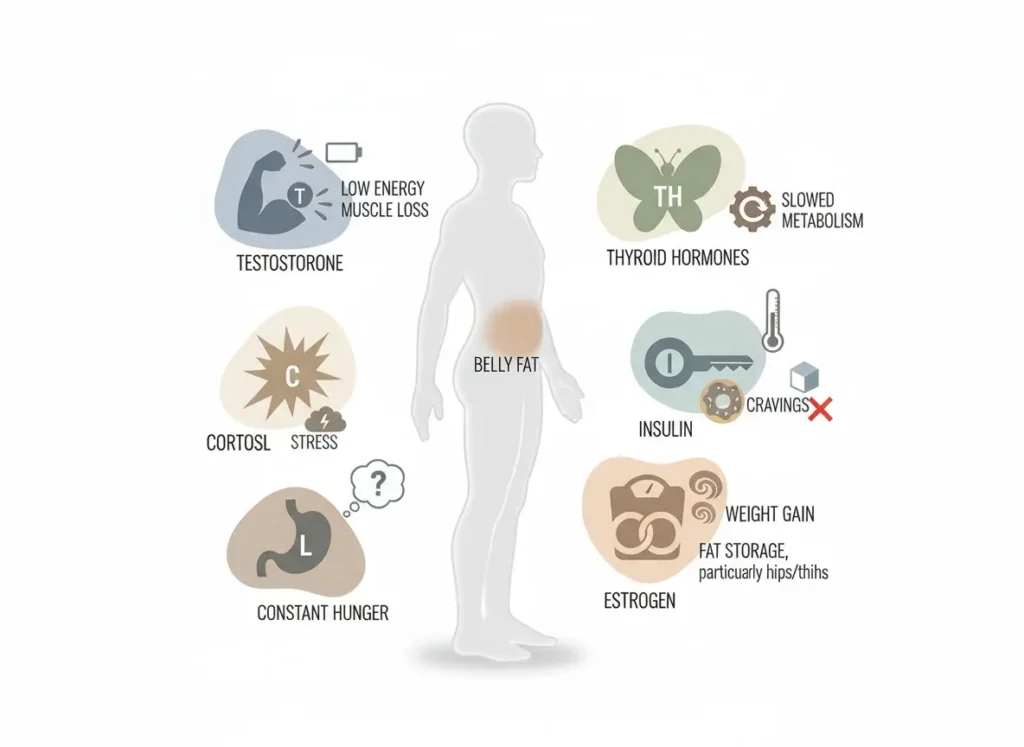
How Low Testosterone Slows Fat Loss and Muscle Retention
Testosterone is not just a sex hormone. It is a metabolic hormone. It drives muscle protein synthesis, regulates fat distribution, and directly influences how efficiently your body burns calories at rest.
As testosterone declines, muscle mass decreases. Less muscle means a lower resting metabolic rate, which means your body burns fewer calories doing the same activities it always did. At the same time, low testosterone promotes visceral fat accumulation, particularly around the abdomen. That fat tissue then converts testosterone into estrogen through aromatization, which suppresses testosterone further. The cycle compounds itself.
Men over 30 lose approximately 1% of their testosterone per year. Women also produce testosterone and experience hormonal decline, particularly during perimenopause and menopause. Both groups are vulnerable to the plateau pattern that low testosterone creates, and both can benefit from assessment and, when appropriate, hormonal treatment.
If your plateau includes increased belly fat, reduced muscle despite consistent training, low energy, and poor recovery, low testosterone is a strong candidate for investigation.
How High Cortisol Promotes Belly Fat and Slows Metabolism
Cortisol is the body’s primary stress hormone. In short bursts it is essential. Chronically elevated cortisol may influence appetite, fat distribution, sleep quality, and metabolic health.
High cortisol increases appetite, specifically cravings for high-calorie, high-carbohydrate foods. It drives fat deposition toward the abdomen. It breaks down muscle tissue to release glucose. It suppresses thyroid function, which slows metabolism. It disrupts sleep, which then drives cortisol higher the following day.
Chronic stress, whether from work, sleep deprivation, under-eating, or overtraining, keeps cortisol elevated and weight loss stalled. People who exercise excessively without adequate recovery are particularly prone to this. The effort they put in keeps cortisol high, which undermines the fat loss they are working toward.
How Thyroid Hormones Control Metabolism and Energy
The thyroid gland controls metabolic rate. When thyroid hormone output drops, every metabolic process slows: calorie burning at rest, digestive efficiency, energy production, and fat mobilization.
Hypothyroidism is underdiagnosed because its symptoms overlap with other conditions. Persistent fatigue, cold intolerance, dry skin, hair thinning, constipation, and unexplained weight gain despite calorie restriction are all classic signs. Women are significantly more likely than men to develop thyroid dysfunction, but men are not immune.
Even subclinical hypothyroidism, where lab values fall within the technically normal range but not the optimal range, can impair weight loss. This is one reason why standard lab interpretation sometimes misses the underlying cause of a plateau.
How Insulin Resistance Makes Fat Loss Harder
Insulin is the hormone that signals cells to absorb glucose from the bloodstream. When cells become resistant to that signal, glucose stays in the blood, the pancreas produces more insulin, and chronically elevated insulin tells the body to store fat rather than burn it.
Insulin resistance does not require a diabetes diagnosis to stall weight loss. It exists on a spectrum, and even moderate resistance makes fat mobilization significantly harder. Diets high in refined carbohydrates, poor sleep, physical inactivity, and excess body fat all drive insulin resistance. It is also a common downstream consequence of low testosterone and elevated cortisol, meaning these hormonal disruptions often arrive together rather than in isolation.
How Leptin and Ghrelin Affect Hunger and Weight Loss
Leptin signals the brain that you have enough energy stored and should stop eating. Ghrelin signals hunger and drives you to seek food. In a functioning system, these two hormones balance each other. In a weight loss plateau, the balance breaks.
As body fat decreases, leptin levels fall, which removes the satiety signal. Simultaneously, ghrelin increases, making you hungrier than you were before you started losing weight. Your brain interprets the lower leptin as a threat to survival and fights back with increased appetite, reduced energy expenditure, and stronger food-seeking behavior.
This is not willpower failure. It is a documented hormonal response to caloric restriction. It explains why plateaus feel so much harder to push through than the initial weight loss phase.
Lifestyle Factors That Worsen Hormonal Weight Loss Plateaus
Hormones do not operate in isolation. These factors interact directly with the hormonal systems above and turn manageable stalls into extended plateaus.
How Poor Sleep Disrupts Fat Loss Hormones
Poor sleep elevates cortisol, suppresses testosterone, increases ghrelin, and reduces leptin. Consistently sleeping fewer than seven hours per night disrupts every hormonal system relevant to weight management simultaneously. People who fix their sleep quality often see weight loss resume without any other intervention.
Why Muscle Loss and Inactivity Slow Metabolism
Muscle mass is the primary driver of resting metabolic rate. People who lose weight through diet alone without resistance training lose both fat and muscle, which drops their metabolic rate and makes subsequent weight loss harder. Strength training preserves muscle during a caloric deficit and maintains the metabolic rate that keeps fat loss moving.
What Metabolic Adaptation Really Means During Weight Loss
As body weight decreases, the body requires fewer calories to maintain that lower weight. This is physiological, not psychological. The body also reduces non-exercise activity thermogenesis (NEAT), the unconscious physical activity like fidgeting and postural adjustments, to conserve energy. Total daily calorie burn can drop significantly without any change in the exercise routine.
Medications That May Contribute to Weight Gain or Plateaus
Several commonly prescribed medications interfere with weight loss or cause weight gain as a side effect. These include some antidepressants, beta-blockers, corticosteroids, and certain antihistamines. If a plateau began around the time a medication was added, this connection is worth raising with your provider.
Signs Hormones May Be Blocking Your Weight Loss
Suspecting a hormonal cause is not enough. You need data. The following symptoms, particularly in combination, point toward a hormonal rather than purely behavioral plateau:
Fatigue that does not improve with adequate sleep. Belly fat accumulation despite calorie control. Muscle loss alongside fat that is not responding. Low mood, reduced motivation, and brain fog. Cold intolerance and slow digestion. Loss of libido or sexual function. Poor recovery from exercise.
These symptoms do not confirm a hormonal problem on their own, but they are strong indicators that lab work is warranted. A blood panel measuring testosterone, estradiol, thyroid function (TSH, free T3, free T4), fasting insulin, and cortisol gives you an objective picture of what is driving the stall.
Why Weight Loss Plateaus Are Not Always Caused by Hormones
Hormones can influence weight, but they are only one part of the picture. Weight-loss stalls may also happen because of changes in calorie needs, portion sizes, activity levels, muscle mass, sleep quality, stress, medications, or inconsistent routines.
A complete evaluation looks at the entire picture instead of assuming one hormone is responsible for every plateau.
How Tucson Wellness MD Evaluates Hormonal Weight Loss Resistance
At Tucson Wellness MD, we do not approach weight loss as a calorie math problem. We approach it as a system problem, where the hormonal environment determines whether the effort you are putting in produces the results you are working toward.
Our assessment begins with comprehensive lab work. We look at total and free testosterone, estradiol, thyroid markers, metabolic markers, and fasting insulin. We review your symptoms alongside your numbers because optimal ranges and clinical ranges are not always the same thing.
For men and women with confirmed hormonal deficiency, we offer testosterone replacement therapy that restores the metabolic and compositional conditions the body needs for fat loss to resume. For patients with weight loss resistance tied to appetite dysregulation and insulin signaling, semaglutide and other GLP-1 therapies address the hunger and glucose side of the equation. We also offer peptide therapies that support growth hormone release, muscle preservation, and metabolic function.
We evaluate possible hormonal and metabolic factors that may contribute to weight loss challenges. That is the difference between breaking a plateau and managing it indefinitely. For personalized weight management options, explore medical weight loss in Tucson and longevity care.
Is a Hormonal or Metabolic Factor Affecting Your Weight Loss?
If your weight loss has stalled despite consistent efforts, Tucson Wellness MD can review your symptoms, labs, medications, metabolism, and health goals to identify possible factors affecting your progress.
Schedule a ConsultationFrequently Asked Questions About Weight Loss Plateaus
Why did my weight loss stop even though I am eating healthy?
Weight loss can slow because your body requires fewer calories after losing weight, muscle mass may change, activity may decrease, or factors like sleep, stress, hormones, and medications may influence progress.
Can hormones prevent weight loss?
Hormones can influence weight management, but they are usually one part of a larger picture. Thyroid hormones, insulin, cortisol, estrogen, testosterone, hunger hormones, sleep, nutrition, and activity all interact.
Can low testosterone affect weight loss?
Low testosterone may affect muscle mass, energy, motivation, and body composition in some men. A provider can determine whether symptoms and lab results support testosterone evaluation.
Why am I not losing weight on semaglutide anymore?
Weight loss may slow on semaglutide because the body adapts, calorie needs change, appetite patterns shift, or other factors such as protein intake, strength training, sleep, and hormones need attention.
What tests can help explain a weight-loss plateau?
Depending on symptoms, a provider may review thyroid markers, glucose and insulin markers, hormones, cholesterol, vitamin levels, medications, sleep quality, and other health factors.
How do I know if hormones are affecting my weight loss?
Hormonal factors may be worth evaluating when weight loss stalls alongside symptoms such as fatigue, low energy, poor recovery, changes in hunger, sleep problems, or changes in body composition.
Can insulin resistance make losing weight harder?
Insulin resistance may affect how the body processes glucose and stores energy. A provider can review symptoms and metabolic markers to determine whether further evaluation is appropriate.
What labs are checked for unexplained weight gain?
Depending on symptoms, providers may review thyroid markers, glucose and insulin markers, sex hormones, metabolic markers, and other health factors.