Slow Metabolism Symptoms: 7 Signs and What to Do
Table of Contents
Quick Answer: What Are Common Slow Metabolism Symptoms?
Common slow metabolism symptoms may include low energy, unexplained weight gain, difficulty losing fat, feeling cold often, constipation, brain fog, mood changes, hair thinning, and hormone-related changes. These symptoms can overlap with thyroid, hormone, nutrient, sleep, and metabolic concerns, so a provider evaluation may help identify possible contributing factors.
Let’s review common signs associated with metabolic changes and practical steps that may help support metabolic health.
Slow Metabolism Symptoms at a Glance
| Symptom | What It May Mean |
|---|---|
| Low energy or fatigue | Your body may not be converting food into usable energy efficiently. |
| Unexplained weight gain | A lower metabolic rate may reduce how many calories your body burns at rest. |
| Difficulty losing fat | Hormone changes, muscle loss, stress, or poor sleep may make fat loss harder. |
| Feeling cold often | Thyroid or metabolic changes may affect body temperature regulation. |
| Constipation or bloating | Slower energy production may affect digestion and gut movement. |
| Brain fog or mood changes | Blood sugar, nutrient status, sleep, or hormone issues may affect mental clarity. |
| Hair thinning or brittle nails | Nutrient, thyroid, stress, or hormone issues may affect hair and nail health. |
Why a Slow Metabolism Often Goes Unnoticed
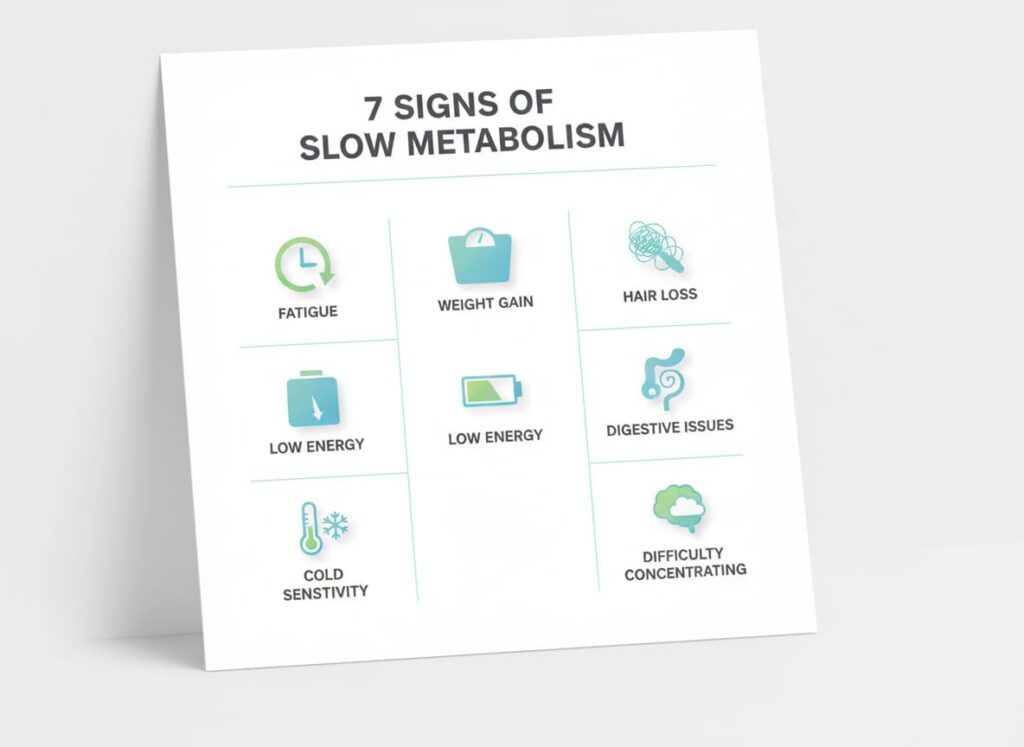
Many people assume feeling tired, foggy, or stuck with their weight is normal aging, not realizing these are early signs their metabolism is no longer working efficiently. When the body struggles to convert food into energy, every system feels the slowdown.
What a Slower Metabolism Means for Your Body
We know understand that a slowed metabolism means your body is less efficient at converting the food you eat (calories) into usable energy than usual. Your metabolic rate is influenced by many factors including age, gender, muscle-to-fat ratio, amount of physical activity and hormone function.
1. Why Low Energy and Fatigue Can Signal Metabolic Changes

You’re getting plenty of sleep, but you still feel drained. Sound familiar? When your metabolism slows, your cells aren’t producing energy efficiently. This can leave you feeling exhausted, unmotivated, and even foggy. Changes in blood sugar regulation or thyroid function may contribute to these symptoms and should be evaluated by a healthcare provider when appropriate. As a result, you might experience increased cravings, particularly for sugary or starchy foods, as the body tries to get more energy.
2. How Metabolism Affects Weight Gain and Fat Loss
If your weight has crept up without any major changes in your habits, it could be metabolic. A slower metabolism burns fewer calories at rest, meaning even the same meals and activities might now lead to weight gain especially around the midsection. Hormonal and metabolic factors may influence weight patterns and should be assessed individually through proper testing and clinical evaluation. Chronic stress and poor sleep don’t help either.

3. Why Cold Intolerance Can Be Linked to Metabolism

Always reaching for a sweater, even in warm temps? Changes in thyroid hormone levels can influence temperature regulation and metabolic function, and evaluation may be appropriate if symptoms persist your internal temperature may drop. This is a common but often overlooked sign of a sluggish metabolism.
4. How Slower Metabolism Affects Digestion and Gut Function
Metabolism doesn’t just affect weight, it influences digestion too. A sluggish metabolism can result in slowed digestion, causing constipation, bloating, or other digestive issues. Reduced energy availability slows gut motility. If your gut is sluggish, it could be a sign that your entire system is slowing down. Supporting gut health with hydration, fiber, and fermented foods is key.

5. How Metabolic Health Influences Mood and Mental Clarity

Poor memory, difficulty concentrating, or feeling down for no obvious reason? When your cells aren’t converting nutrients into usable energy efficiently, your brain suffers too. These symptoms may be associated with fluctuations in blood sugar, cellular energy production, or nutrient status and warrant further clinical evaluation when ongoing.
6. Why Hair and Nail Changes Can Reflect Metabolic Health
Your hair and nails reflect your internal health. Thinning, shedding, or slow-growing hair could point to protein or micronutrient deficiencies, poor thyroid function, or stress. Your body prioritizes survival, not beauty, when resources are low.

7. How Hormone Imbalances Affect Metabolism

Irregular or missed periods, PMS, and low libido can all be signs of hormonal imbalance. Key hormones like estrogen, progesterone, and testosterone play a major role in your metabolic health, so when they’re off, your metabolism often is too. Thyroid hormones also regulate how your body uses glucose, burns fat, and stores energy so disruptions here can significantly impact your metabolic function.
If weight gain or fat loss resistance is your main concern, learn more about our medical weight loss options.
If low energy, low libido, or hormone changes are part of your symptoms, you may also want to explore TRT for men, TRT for women, or menopause therapy.
Hormone-related symptoms can vary widely between individuals. Testing and professional evaluation can help determine whether hormone changes may be contributing to metabolic concerns.
When to Speak With a Provider About Slow Metabolism Symptoms
You should speak with a provider if slow metabolism symptoms continue, get worse, or start affecting your weight, energy, mood, sleep, digestion, or daily routine.
A clinical evaluation may help identify whether your symptoms are linked to thyroid function, hormone changes, blood sugar regulation, nutrient deficiencies, stress, sleep quality, or other metabolic factors.
Understanding these factors is also an important part of supporting long-term health and healthy aging through personalized care.
Provider-guided testing matters because symptoms like fatigue, weight gain, constipation, cold intolerance, and brain fog can overlap with several health concerns. Guessing often leads to wasted time. Testing gives you a clearer path forward.
Struggling With Weight, Energy, or Metabolism?
If you feel stuck despite eating better, exercising, or trying to lose weight on your own, Tucson Wellness MD can help you understand what may be affecting your metabolism. Understanding the factors affecting metabolism can help create a more personalized approach to weight management. Evaluation may include reviewing lifestyle habits, metabolic factors, hormones, and other health markers that influence energy and weight changes.
Simple Ways to Support a Healthier Metabolism
Supporting metabolism involves multiple factors rather than a single solution. Nutrition, movement, sleep, stress management, muscle maintenance, and appropriate testing all play a role in understanding and supporting metabolic health.
The good news? You have more control than you think. Here are simple, foundational steps to support a healthier, more efficient metabolism:
- Eat enough – especially protein and healthy fats
- Balance blood sugar with regular meals and real food
- Strength train to support lean muscle and metabolic function
- Move daily beyond the gym (walking, stretching, mobility)
- Prioritize sleep and manage stress (this includes saying no and resting!)
- Support your gut with fiber, fermented foods, and hydration
- Get tested if needed: thyroid panel, sex hormones, nutrient status
Your metabolism is your body’s internal engine and just like a car, it needs the right fuel and maintenance to run well. If you’re noticing any of these signs, don’t ignore them. They may be gentle nudges from your body asking for more support.
Start Supporting Your Metabolism Today
By making intentional shifts to how you eat, move, sleep, and manage stress,You may support metabolic health and energy levels by making sustainable lifestyle adjustments and working with a qualified provider when needed, focused, and in control. Small steps really do make a big impact. Now is the time to start tuning in and taking action. If you are experiencing persistent symptoms, scheduling a consultation with a licensed healthcare provider may help determine whether additional evaluation or testing is appropriate.
Understand What May Be Affecting Your Metabolism
Persistent fatigue, weight changes, brain fog, or hormone-related symptoms may have multiple contributing factors. Tucson Wellness MD can help evaluate your concerns and discuss personalized options based on your health goals.
Frequently Asked Questions
What does it mean when your metabolism slows down?
A slowed metabolism means your body is less efficient at turning food into usable energy. This can affect weight, energy levels, digestion, temperature regulation, mood, and hormone balance.
Can metabolism really slow down even if my habits haven’t changed?
Yes. Metabolism can slow due to age, chronic stress, hormonal changes, under-eating, muscle loss, poor sleep, or thyroid dysfunction, even if your diet and activity stay the same.
Is weight gain always a sign of a slow metabolism?
Not always, but unexplained weight gain or difficulty losing weight can be a common sign. When metabolism slows, your body burns fewer calories at rest, making fat storage easier.
When should I worry about slow metabolism symptoms?
You should speak with a provider if symptoms like fatigue, weight gain, cold intolerance, constipation, brain fog, or hair thinning continue despite healthy lifestyle changes.
Can hormone imbalance slow metabolism?
Yes. Thyroid hormones, estrogen, progesterone, testosterone, cortisol, and insulin all influence metabolism. When these hormones shift, energy, weight, mood, sleep, and fat loss may change.
Can a slow metabolism cause fatigue?
A slower metabolism may contribute to low energy because the body may become less efficient at converting food into usable energy. Fatigue can also have many other causes, including thyroid issues, nutrient deficiencies, stress, and sleep concerns.
What tests can help evaluate slow metabolism symptoms?
Depending on symptoms, a provider may consider evaluating factors such as thyroid function, hormone levels, nutrient status, blood sugar regulation, and other metabolic markers.
Can building muscle improve metabolism?
Strength training can help support lean muscle, which plays an important role in metabolic function and how much energy the body uses.