How Long Does TRT Take to Work? Timeline, Results, and What to Expect
Table of Contents
Starting testosterone replacement therapy comes with one immediate question: when will I actually feel different?
TRT does not work overnight. Understanding your expected timeline is an important part of starting testosterone replacement therapy for men and knowing what changes to monitor throughout treatment. Different systems in your body respond to testosterone at different rates. Some changes appear within the first few weeks. Others take several months to fully develop. Knowing what to expect and when helps you stay consistent and interpret your progress accurately.
Here is a realistic, research-informed timeline of what most men experience during testosterone replacement therapy.
Quick Answer: How Long Does TRT Take to Work?
Most men begin noticing early TRT changes within 3 to 6 weeks, including improvements in sleep, energy, mood, or libido. Changes in workout recovery, muscle support, and body composition often develop over 3 to 6 months. Results vary depending on testosterone levels, dosage, treatment method, lifestyle habits, and provider monitoring.
| TRT Timeline Area | What Men May Notice | Why Tracking Matters |
|---|---|---|
| Sleep | Better sleep quality or easier recovery | Sleep changes may appear before body composition changes |
| Energy | Less fatigue or more stable daily energy | Energy changes help show early treatment response |
| Mood | Improved motivation, steadier mood, less irritability | Mood tracking helps identify whether dose adjustment is needed |
| Libido | Improved sexual interest or performance | Libido often changes before muscle or fat-loss changes |
| Strength | Better workout recovery and performance | Strength changes usually take longer and depend on training |
| Body composition | More lean muscle support and fat-loss support | Physical changes often take 3 to 6 months |
| Side effects | Acne, water retention, mood shifts, or blood pressure changes | Side effects should be reviewed before changing dose |
What Can Delay TRT Results?
TRT results are not always immediate. Some men respond quickly, while others need more time for hormone levels to stabilize and for the provider to adjust the treatment plan.
TRT results may be delayed by:
- Inconsistent treatment use
- Incorrect dose or delivery method
- Poor sleep
- High stress
- Low protein intake
- Limited strength training
- Excess alcohol use
- Weight gain or insulin resistance
- Thyroid or metabolic issues
- Skipping follow-up labs
- Expecting body composition changes too early
If results feel slow, the next step is not to guess or increase the dose on your own. Follow-up labs, symptom tracking, and provider review can help identify whether your plan needs adjustment.
What Affects Your TRT Timeline?
TRT does not work at the same speed for every patient. Some men notice better sleep, mood, or energy within the first few weeks, while others need more time for testosterone levels to stabilize and for their treatment plan to be adjusted.
Your timeline may depend on your starting testosterone levels, treatment method, dosage, age, sleep quality, nutrition, stress, training habits, body composition, and how consistently your labs are monitored. That is why provider-guided TRT care is important. Symptoms matter, but lab results help show whether your treatment plan is moving in the right direction.
A complete testosterone evaluation can help identify whether symptoms may be related to hormone levels, lifestyle factors, or other health concerns. Learn more about TRT for men and available treatment options.
TRT Results Timeline: What to Expect
| Timeline | Possible Changes | What to Remember |
|---|---|---|
| Weeks 1 to 3 | Subtle changes in sleep, mood, morning energy, or motivation. | Early changes may be mild. Do not expect a dramatic transformation right away. |
| Weeks 3 to 6 | Improved libido, better energy, mental clarity, and reduced fatigue. | This is when many men begin to feel TRT working more clearly. |
| Months 2 to 3 | Better workout recovery, improved erectile function, steadier energy, and less brain fog. | Progress often becomes more noticeable when TRT is combined with sleep, nutrition, and exercise. |
| Months 3 to 6 | Lean muscle support, fat loss support, strength improvements, mood stability, and body composition changes. | Physical changes usually take longer than early energy or libido changes. |
| After 6 months | More stable baseline, treatment fine-tuning, and long-term symptom tracking. | Ongoing labs and provider check-ins help maintain safe and effective results. |
Who Should Track Their TRT Timeline?
Tracking your TRT timeline helps you understand whether your treatment is moving in the right direction. It also helps prevent unrealistic expectations, since energy, libido, mood, strength, and body composition may improve at different speeds.
You should pay close attention to your TRT progress if you want to monitor:
- Energy changes
- Libido and sexual performance
- Mood stability
- Sleep quality
- Workout recovery
- Muscle gain
- Fat loss
- Brain fog
- Motivation
- Side effects
- Lab results and dosage adjustments
A clear timeline helps you know what is normal, what needs more time, and when to talk to your provider about changes.
TRT Results Timeline Table
| Timeline | Common Changes | What to Know |
|---|---|---|
| Weeks 1 to 3 | Better sleep, mild energy changes, mood shifts | Changes are often subtle and may not feel dramatic yet. |
| Weeks 3 to 6 | Improved libido, motivation, mental clarity, reduced fatigue | This is when many men notice TRT starting to work. |
| Months 2 to 3 | Better workout recovery, energy, erectile function, less brain fog | Performance and daily energy often improve during this phase. |
| Months 3 to 6 | Lean muscle, fat loss, libido, mood, strength, body composition | Long-term benefits usually become more visible with consistency. |
| After 6 months | More stable baseline and treatment fine-tuning | Labs and provider check-ins help maintain safe, effective results. |
How to Know If Your TRT Plan Needs Adjustment
TRT requires monitoring because every patient responds differently. Some men feel early improvements within a few weeks, while others need dosage adjustments, lifestyle changes, or a different delivery method.
Talk to your provider if you notice:
- No improvement after 8 to 12 weeks
- Ongoing fatigue
- Low libido despite treatment
- Mood swings or irritability
- Acne or skin changes
- Water retention
- Poor sleep
- Changes in blood pressure
- Concerns with lab results
- Side effects that feel unusual
Do not stop TRT or change your dose on your own. Lab testing and provider review help determine whether your testosterone levels, dosage, delivery method, or supporting habits need adjustment.
Understand Your TRT Timeline With Provider Guidance
Every man’s TRT response is different. Tucson Wellness MD helps patients track symptoms, review lab results, and adjust treatment plans based on individual goals and health factors.
Schedule a TRT ConsultationHow Long Does TRT Take to Work for Energy, Libido, and Muscle?
Most men begin noticing early changes within 3 to 6 weeks of starting TRT. Full benefits — including improvements in muscle composition, sexual function, and mood stability — typically develop over 3 to 6 months of consistent treatment. Individual results vary based on starting testosterone levels, delivery method, dosage, and overall health.
TRT Timeline by Week and Month
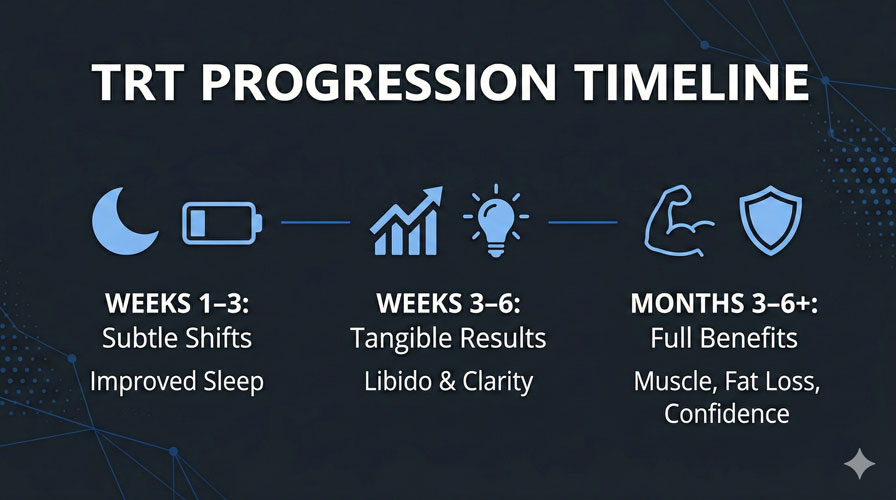
Weeks 1 to 3: Early Sleep, Mood, and Energy Changes
During the first few weeks, most men do not notice dramatic changes. However, early physiological shifts are already underway.
Some men report:
- Improved sleep quality
- Slight increase in morning energy
- Reduced irritability or mood fluctuations
These early changes are often subtle. Do not expect a sudden surge in energy or libido this early in the process.
Weeks 3 to 6: Libido, Energy, and Mental Clarity Improvements
Between weeks three and six, many men begin experiencing more tangible results. This is typically when testosterone levels begin stabilizing in the bloodstream.
Common reports during this phase include:
- Improved libido and sexual interest
- Increased motivation and mental clarity
- Early reduction in fatigue
- Better mood consistency throughout the day
This is also when some men experience minor side effects such as temporary water retention or skin changes as the body adjusts to new hormone levels. Monitoring with your provider during this phase is important.
Months 2–3: Energy and Performance Improvements
By the second and third month, most men notice measurable improvements in physical performance and daily energy.
What typically develops:
- Noticeably better workout endurance and recovery
- Reduction in brain fog
- Improved erectile function
- More stable energy levels without afternoon crashes
If you are combining TRT with an active lifestyle, this is often the phase when physical training starts to produce better results. Our Strength & Performance program can help you build on this momentum.
Months 2 to 3: Workout Recovery, Energy, and Performance Changes
The most significant physical changes often emerge between months three and six. Testosterone plays a direct role in muscle protein synthesis and fat metabolism, and these effects become more visible over time.
During this phase, most patients experience:
- Visible improvements in lean muscle mass
- Reduction in abdominal fat
- Stronger bone density support
- Sustained libido and sexual performance improvements
- Emotional stability and improved confidence
By month six, most men on an optimized TRT protocol have reached a stable baseline that reflects the full benefit of treatment.
Factors That Affect How Quickly TRT Works
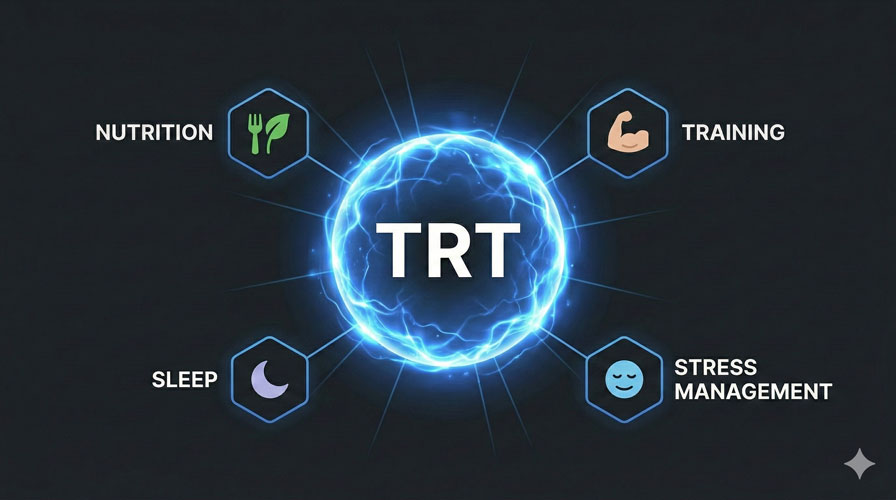
Several factors influence your individual timeline:
Starting testosterone levels — Men with severely low testosterone may notice more pronounced early changes compared to those with borderline levels.
Delivery method — Injections tend to produce faster initial peaks. Gels and patches provide more gradual, consistent absorption.
Dosage optimization — Results depend heavily on dialing in the right dose through ongoing lab monitoring.
Lifestyle habits — Sleep, nutrition, resistance training, and stress management all amplify TRT outcomes.
TRT Timeline and Testosterone Support in Tucson
If you are in Tucson and wondering how long TRT takes to work, provider-guided care can help you track progress safely. Testosterone levels, dosage, delivery method, nutrition, sleep, training, and stress can all affect how quickly you notice results.
TRT is one part of long-term wellness. Patients interested in broader health optimization may also explore longevity care for additional wellness support.
At Tucson Wellness MD, men receive TRT support with lab monitoring, provider check-ins, and personalized treatment adjustments. This helps you understand whether your timeline is on track and when your plan may need fine-tuning.
When to Talk to Your TRT Provider About Progress
If you are approaching the 8 to 12-week mark and have not noticed any improvement, that is a signal to revisit your dosage or delivery method, not to stop therapy. TRT requires fine-tuning, and labs tell a clearer story than symptoms alone.
At Tucson Wellness MD, our TRT program for men includes regular lab monitoring and provider check-ins to ensure your protocol is working for your specific physiology, not just a generic template.
Ready to start? Schedule a consultation with our team today.
When TRT Results May Need Adjustment
If you do not feel any meaningful improvement after 8 to 12 weeks, that does not always mean TRT is failing. It may mean your dosage, delivery method, lab levels, sleep quality, nutrition, stress, or another health factor needs to be reviewed.
Talk to your provider if you notice ongoing fatigue, low libido, mood swings, irritability, acne, water retention, poor sleep, blood pressure changes, or side effects that feel unusual. Do not stop TRT or change your dose without medical guidance. Lab testing and provider review are the safest way to decide what comes next.
Why Lab Monitoring Helps Fine-Tune TRT Results
TRT should be monitored because symptoms alone do not tell the full story. A man may feel better while labs still need adjustment, or he may feel limited improvement because testosterone levels, estradiol, blood count, or another marker needs review.
A provider may monitor:
- Total testosterone
- Free testosterone
- Estradiol
- CBC
- PSA when appropriate
- Lipids
- Liver markers
- Blood pressure
- Symptoms and side effects
- Sleep, energy, libido, and mood changes
Lab monitoring helps your provider decide whether your TRT plan should stay the same, be adjusted, or be reconsidered.
Is Your TRT Progress on Track?
TRT results depend on more than testosterone levels alone. Tucson Wellness MD can help review your symptoms, lab results, treatment response, and overall health goals to determine whether your current plan needs adjustment. Schedule a TRT Consultation
Wondering If Your TRT Timeline Is on Track?
Tucson Wellness MD offers provider-guided TRT care with lab monitoring, dosage review, symptom tracking, and personalized support to help men understand their progress.
Schedule a TRT ConsultationWhy Medical Supervision Matters During TRT
TRT is not just about raising testosterone levels. Safe treatment also requires monitoring symptoms, bloodwork, side effects, cardiovascular markers, and overall response. The goal is to improve quality of life while reducing avoidable risks.
A provider may review testosterone levels, CBC, estradiol, lipid markers, PSA when appropriate, blood pressure, sleep quality, fertility goals, and treatment response. This helps determine whether your TRT plan is working, whether adjustments are needed, and whether your progress timeline is realistic.
TRT Monitoring Checklist
| Monitoring Area | Why It Matters | When to Review It |
|---|---|---|
| Total and free testosterone | Helps determine whether testosterone levels are responding appropriately. | Before treatment and during follow-up visits. |
| CBC | Checks red blood cell markers that may change during TRT. | During routine TRT monitoring. |
| Estradiol | Helps evaluate hormone balance and symptoms. | When symptoms or labs suggest review is needed. |
| Lipid panel | Reviews cardiovascular risk markers. | Before and during ongoing care. |
| Blood pressure | Helps monitor cardiovascular response. | At visits and as recommended by the provider. |
| PSA, when appropriate | May be reviewed based on age, symptoms, and medical history. | As part of individualized TRT screening. |
| Symptoms and side effects | Helps determine whether the plan feels effective and tolerable. | At each follow-up visit. |
Reviewed for Medical Accuracy
This article is educational and is not a substitute for diagnosis, prescription, or individualized medical advice. Tucson Wellness MD recommends speaking with a qualified provider before starting, stopping, or adjusting testosterone replacement therapy.
Understand Your TRT Progress With Personalized Guidance
TRT results vary based on your testosterone levels, symptoms, treatment method, and overall health. Tucson Wellness MD provides provider-guided TRT care with lab monitoring and personalized support to help you understand your progress and determine when adjustments may be needed.
Book a TRT ConsultationFrequently Asked Questions
How long does testosterone replacement therapy take to work?
Most men notice early changes within 3 to 6 weeks. Full benefits, including muscle growth, improved libido, and mood stability, often develop over 3 to 6 months of consistent treatment.
What happens during the first month of TRT?
In the first 3 to 4 weeks, some men report better sleep, slightly improved energy, and more stable mood. Libido and mental clarity often begin improving between weeks 3 and 6.
When does TRT improve libido and sexual performance?
Many men notice improved libido within 3 to 6 weeks. Erectile function and sustained performance improvements typically become more noticeable by months 2 to 3.
What are the first signs that TRT is working?
The earliest indicators are often improved sleep quality, slightly better morning energy, and more stable mood. These typically appear in weeks one through three. More noticeable changes like improved libido, mental clarity, and reduced fatigue usually emerge between weeks three and six.
Does TRT delivery method affect how fast it works?
Yes. Injections produce faster initial peaks in testosterone levels, which some men notice earlier. Gels and pellets absorb more gradually and provide steadier, more consistent levels over time. Neither is universally better, the right method depends on your lifestyle and how your body responds.
What if I don’t feel any different after 8 weeks on TRT?
Reach out to your provider before stopping. At the 8 to 12-week mark with no improvement, the dose or delivery method may need adjustment. Labs at this stage are essential, they tell you whether testosterone levels have stabilized at an optimal range or if further titration is needed.
When does TRT start improving body composition?
Visible changes in lean muscle mass and reduction in body fat are typically most noticeable between months three and six. Testosterone’s role in muscle protein synthesis and fat metabolism takes time to produce measurable physical changes, which is why consistency in both treatment and training matters during this window.
Why am I not feeling results from TRT yet?
Some men need more time before they notice TRT results, especially if treatment started recently. If you do not feel changes after 8 to 12 weeks, talk to your provider about labs, dosage, delivery method, lifestyle habits, and other health factors that may affect your response.
How do I know if my TRT dose is right?
The right TRT dose depends on symptoms, lab results, treatment response, and side effects. A provider reviews testosterone levels and related markers before adjusting the dose. Do not change your dose without medical guidance.
How long should I wait before evaluating TRT results?
TRT response should usually be evaluated over several weeks to months because different symptoms improve at different rates. Energy and sleep may change earlier, while muscle and body composition changes often require more time.
Can lifestyle habits affect TRT results?
Yes. Sleep quality, nutrition, exercise, stress management, and consistency with treatment can influence how quickly patients notice improvements.
Why are TRT follow-up labs important?
Follow-up labs help providers evaluate testosterone levels, safety markers, and treatment response to determine whether adjustments are needed.
Does TRT work immediately?
TRT does not usually create immediate changes. Some men notice early improvements in sleep, mood, or energy within several weeks, while physical changes such as muscle support and body composition improvements often take several months.
Can exercise improve TRT results?
Exercise, especially resistance training, may support better outcomes during TRT by helping improve strength, muscle development, and overall health. Lifestyle habits should be combined with provider-guided treatment.