Testosterone Killing Foods: What to Cut If You Have Low T
Table of Contents
Many men with low testosterone focus on what to add, such as supplements, injections, or therapy. But daily food choices, alcohol intake, processed foods, excess sugar, and certain environmental exposures may also affect hormone health.
Diet does not usually cause low testosterone by itself, but it can influence body composition, insulin resistance, inflammation, estrogen activity, and nutrient status. If you are experiencing fatigue, reduced muscle mass, low libido, or mood changes, lab testing can help determine whether low testosterone or another health factor is involved.
This guide covers the specific foods and dietary patterns that research links to lower testosterone, why they cause harm, and what to do about it. If dietary changes are not enough, Tucson Wellness MD offers medically supervised testosterone therapy for men with confirmed deficiency.
Quick Answer: What Foods May Lower Testosterone?
Foods and habits that may negatively affect testosterone include heavy alcohol intake, ultra-processed foods, fried foods, refined sugar, excess refined carbohydrates, and certain environmental exposures such as chemicals from plastic food packaging. These factors may influence hormone health by affecting body composition, insulin resistance, inflammation, and nutrient balance.
How Diet Affects Testosterone Production
Testosterone production is a hormonal process that requires proper raw materials and an environment free from disruption. When you consistently consume foods that interfere with hormone synthesis, raise estrogen, or drive weight gain, your body’s ability to maintain healthy testosterone levels declines over time.
No single meal will destroy your testosterone. The effects may build over time. Men who eat diets high in processed foods, refined sugars, and unhealthy fats over months and years show measurably lower testosterone levels than men who eat whole food diets. This is not a matter of anecdote. Studies support it.
Understanding which specific foods drive these outcomes gives you a starting point for making changes that support your hormone health.
Foods That Lower Testosterone
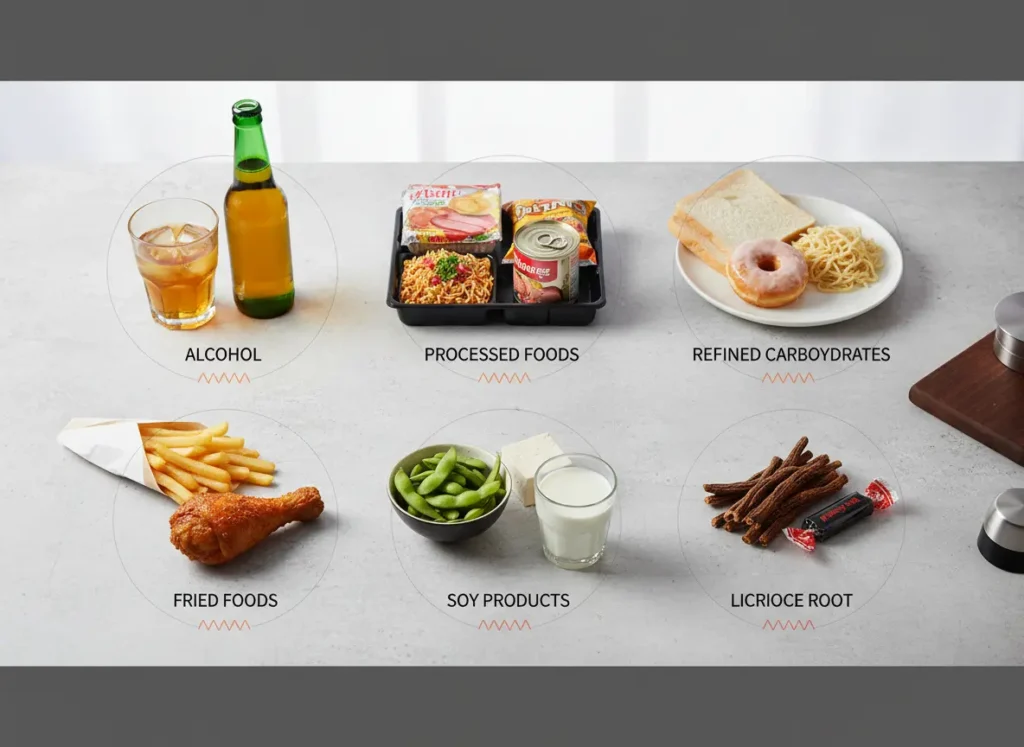
Foods and Habits That May Affect Testosterone
Testosterone levels are influenced by overall diet quality, body composition, alcohol intake, sleep, stress, and metabolic health. This table summarizes common diet-related concerns.
| Food or Exposure | Why It May Matter | Better Option |
|---|---|---|
| Heavy Alcohol Intake | May affect liver function, hormone signaling, sleep, and estrogen balance. | Limit intake and discuss alcohol use if low T symptoms are present. |
| Processed and Fried Foods | May worsen body fat, inflammation, and metabolic health. | Choose whole foods, lean proteins, vegetables, and minimally processed meals. |
| Refined Sugar and Desserts | May contribute to blood sugar swings, insulin resistance, and weight gain. | Prioritize protein, fiber, fruit, and balanced meals. |
| Refined Carbohydrates | May affect insulin sensitivity and body composition over time. | Use whole grains, legumes, vegetables, and fiber-rich carbs. |
| Plastic Food Packaging | Some chemicals may act as endocrine disruptors. | Use glass or stainless steel for storage and reheating. |
Alcohol
Alcohol is one of the more concerning factors for testosterone health in the average man’s diet. Chronic alcohol consumption interferes with hormone synthesis in two ways. First, the liver prioritizes metabolizing alcohol over its role in hormone regulation. Second, alcohol increases estrogen production, which may work against healthy testosterone balance. Heavy drinking, defined as eight or more drinks per week, has been associated with a significantly higher risk of testosterone deficiency. Even a single binge drinking episode has been shown to reduce testosterone levels for up to 24 hours. Moderate, occasional consumption is unlikely to cause lasting damage, but consistent or heavy intake is a important hormone health concern.
Processed and fried foods
Fast food, packaged snacks, frozen meals, and fried foods are often high in trans fats, refined oils, and additives. Trans fats have been associated with lower testosterone in research involving young, healthy men. Beyond the hormone impact, these foods may contribute to weight gain, and excess body fat is one of the strongest predictors of low testosterone. Fat tissue converts testosterone into estrogen through aromatization, creating a cycle that compounds the deficiency over time.
Improving body composition through healthy lifestyle changes and medical weight loss support may also be part of a broader hormone health strategy.
Refined sugar and desserts
Consuming 75 grams of sugar produces a measurable drop in testosterone that persists for up to two hours. Men who eat diets high in refined sugar, bread, pastries, sodas, and desserts show higher rates of hypogonadism, the clinical term for low testosterone. A study published in the National Library of Medicine identified high consumption of bread, pastries, dairy products, and desserts as independent predictors of testosterone deficiency in men.
Soy products
Soy contains phytoestrogens, plant compounds that mimic estrogen in the body. Tofu, soy milk, edamame, and tempeh all fall into this category. The research on soy and testosterone is mixed at moderate consumption levels, but men who already show signs of hormonal imbalance or who consume soy as a daily dietary staple should be aware of the potential impact. Excessive soy intake has also been linked to reduced thyroid function, which may contribute to lower free testosterone levels
Refined carbohydrates
White bread, white rice, pasta, and baked goods spike blood sugar rapidly and contribute to insulin resistance over time. Insulin resistance disrupts the signaling pathway that triggers testosterone production. Men who eat high-carbohydrate diets built around refined grains rather than whole foods show lower average testosterone compared to those eating balanced macronutrient profiles.
Licorice root
Licorice contains a compound called glycyrrhizin, which inhibits enzymes involved in testosterone synthesis. In one study, 25 men saw a 26% drop in testosterone after consuming 7 grams of licorice root daily. This applies to actual licorice root, not most commercially flavored candy, but men who consume licorice-containing teas, supplements, or herbal remedies should be aware of the effect.
Vegetable oils high in polyunsaturated fats
Oils like canola, soybean, sunflower, and safflower are high in omega-6 fatty acids and polyunsaturated fats (PUFAs). Research links high PUFA intake to reduced testicular tissue function and lower testosterone. These oils are common in processed and restaurant-prepared foods, making them easy to overconsume without realizing it. Replacing them with olive oil, coconut oil, or butter from quality sources reduces exposure.
Food packaging chemicals
This is one that men rarely think about, but research suggests this may matter. Phthalates and bisphenol A (BPA), chemicals found in plastic food packaging and containers, act as androgen disruptors. They bind to hormone receptors and block testosterone activity at the cellular level. Heating food in plastic containers increases chemical leaching. Men with high urinary phthalate concentrations show lower circulating testosterone levels. Switching to glass or stainless steel containers for food storage and reheating is a straightforward way to reduce exposure.
Dietary Patterns That Predict Low Testosterone
Individual foods matter, but the overall pattern of eating is what determines long-term hormone health. Research points to specific dietary patterns associated with testosterone deficiency in men:
Eating out frequently, which typically means higher intake of refined carbohydrates, trans fats, and processed ingredients, independently predicts lower testosterone. Men who rely on restaurant meals or fast food as a regular part of their diet have fewer dietary controls over the hormone-disrupting compounds they consume.
Low-fat, high-fiber diets, while often promoted for cardiovascular health, have been associated with lower testosterone in some studies. Fat is a precursor to steroid hormones including testosterone. Men who eliminate healthy dietary fats in pursuit of weight loss may inadvertently reduce the raw materials the body needs for hormone production.
Diets high in processed foods combined with low intake of vegetables, particularly dark leafy greens, consistently correlate with lower testosterone and higher rates of hypogonadism.
What to Eat Instead
Cutting testosterone-suppressing foods is only half the equation. Replacing them with foods that support hormone production accelerates the benefit.
Zinc-rich foods support testosterone synthesis directly. Oysters, red meat, pumpkin seeds, and legumes are high in zinc. Men deficient in zinc show measurably lower testosterone. Cruciferous vegetables like broccoli, cauliflower, and Brussels sprouts contain compounds that help the body metabolize excess estrogen. Healthy fats from eggs, avocado, olive oil, and fatty fish provide the cholesterol backbone that testosterone is built from. Adequate protein intake supports muscle mass, which in turn supports testosterone.
Sleep, stress management, and resistance training are the non-dietary factors that have the strongest documented impact on testosterone levels outside of clinical treatment.
Related Reading
- TRT Timeline: When Does Testosterone Replacement Therapy Start Working?
- Low Libido and Hormone Health: What Your Body May Be Telling You
- Understanding Body Composition: Lean Body Mass vs Muscle Mass
When Diet Is Not Enough
Dietary changes support hormone health, but they have limits. If your testosterone is low due to age-related decline, a structural issue, or chronic deficiency, food choices alone will not restore it to optimal levels.
Persistent low testosterone symptoms such as fatigue, low libido, reduced strength, and poor recovery may require a complete hormone evaluation to identify whether testosterone deficiency is present.
Testosterone replacement therapy is a common treatment option for men with clinically confirmed low testosterone. Men experiencing symptoms of testosterone deficiency can learn more about TRT for men and how providers evaluate hormone levels before treatment. At Tucson Wellness MD, we begin every assessment with comprehensive lab work to measure your total testosterone, free testosterone, estradiol, and key metabolic markers. Treatment is based on your specific numbers, not a general protocol.
Find Out If Low Testosterone Is Affecting Your Health
Diet changes can support hormone health, but persistent low testosterone symptoms may require proper testing and medical evaluation. Tucson Wellness MD reviews symptoms, lab results, and health goals to help determine appropriate options.
Schedule a Low T ConsultationMen who address their diet alongside TRT consistently see better results than those who rely on therapy alone. The two approaches work together. TRT may help address clinically confirmed deficiency. A cleaner diet removes the ongoing inputs that suppress hormone function and drive the conditions that make deficiency worse.
Related Low T and Hormone Services
Diet can support hormone health, but low testosterone should be confirmed with proper lab testing. Tucson Wellness MD offers TRT for men, strength and performance, medical weight loss, longevity care, and concierge primary care.
Concerned About Low Testosterone?
If fatigue, low libido, weight gain, reduced strength, or mood changes are affecting your daily life, Tucson Wellness MD can help you review your symptoms, labs, lifestyle, and treatment options.
Schedule a Low T ConsultationFrequently Asked Questions
Can changing my diet alone fix low testosterone?
For some men with mild deficiency driven primarily by lifestyle factors, yes. For men with moderate to severe low T, diet alone rarely restores levels to an optimal range. It is a necessary foundation but usually not sufficient on its own.
How quickly does diet affect testosterone levels?
Some effects are rapid. A sugar binge can reduce testosterone within hours. Chronic dietary patterns take weeks to months to shift baseline hormone levels in either direction.
Is alcohol the worst food for testosterone?
Chronic heavy alcohol use is among the most damaging dietary habits for testosterone. But processed foods and trans fats create compounding damage over time that rivals alcohol, particularly because men tend to underestimate how much of these they consume.
Does soy affect testosterone in all men?
Not necessarily at moderate intake. Men who eat soy occasionally as part of a varied diet are unlikely to see significant effects. Men who consume soy products daily as a dietary staple, particularly those already showing low T symptoms, should consider reducing intake and testing their hormone levels.
How do I know if my diet is affecting my testosterone?
Get tested. A blood panel measuring total testosterone, free testosterone, and estradiol gives you a baseline. Make dietary changes, retest in 8 to 12 weeks, and compare. That is the only way to know with certainty whether dietary changes are moving the needle for you.
What foods should I limit if I have low testosterone?
Men with low testosterone may benefit from limiting heavy alcohol intake, ultra-processed foods, fried foods, refined sugar, and excess refined carbohydrates. These choices may affect weight, insulin resistance, inflammation, sleep, and hormone balance.
Can losing weight improve testosterone?
Weight loss may help some men improve testosterone levels, especially when excess body fat, insulin resistance, and poor metabolic health are involved. Lab testing can help track whether lifestyle changes are improving hormone markers.
Does sugar lower testosterone?
High sugar intake may affect testosterone indirectly by worsening blood sugar control, insulin resistance, weight gain, and metabolic health. Occasional sugar intake is different from a consistent high-sugar diet.
When should I get tested for low testosterone?
Consider testing if you have ongoing fatigue, low libido, reduced muscle mass, mood changes, weight gain, poor recovery, or erectile concerns. Testing should include total testosterone, free testosterone, estradiol, and related metabolic markers.
What foods should men eat to support testosterone?
Foods that support overall hormone health include protein-rich foods, zinc-containing foods such as oysters and pumpkin seeds, healthy fats, vegetables, and nutrient-dense whole foods.
Can improving my diet increase testosterone naturally?
Diet improvements may support testosterone levels by improving body composition, metabolic health, and nutrient status. However, men with clinically confirmed deficiency may require medical evaluation.
How do I know if low testosterone is caused by my diet?
Testing is the best way to evaluate testosterone levels. A provider may review hormone labs, symptoms, lifestyle habits, and other health factors.