Choosing the Right Protein: What to Eat & Common Questions Answered
Table of Contents
What Protein Is Best for Your Goals and Lifestyle?
The best protein for you depends on your goals, digestion, and lifestyle, but high-quality complete proteins like lean meats, eggs, fish, dairy, or well-formulated protein powders work best for most people. If you prefer plant-based options, combining sources like legumes, grains, and seeds helps you meet your amino acid needs.
Protein plays a key role in muscle maintenance, tissue repair, hormone production, immune function, and satiety.
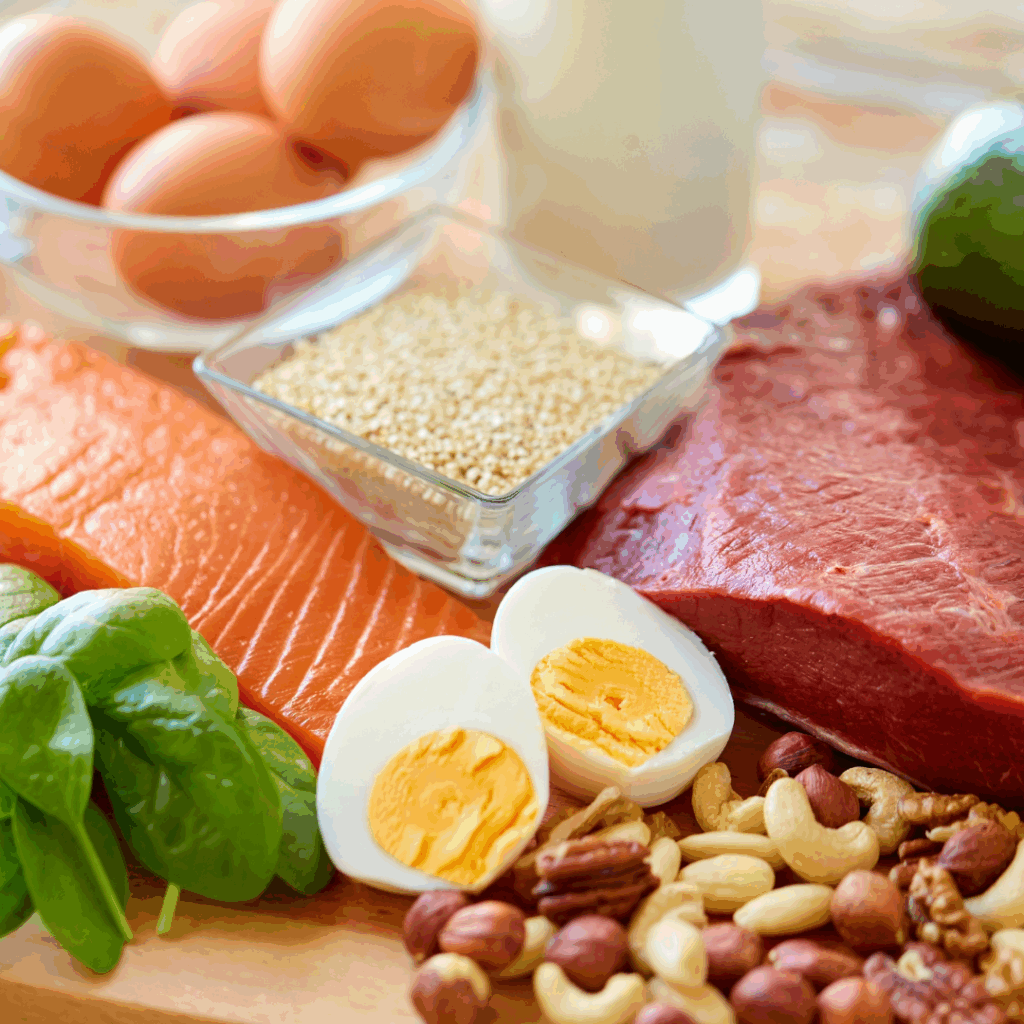
But with so many choices out there (animal-based, plant-based, powders, bars…), it can feel confusing to know what kind of protein is best for you. Let’s break it down and answer some of the most common questions we get about protein.
When Should You Eat Protein for the Best Results?
Protein can be spread across meals and snacks throughout the day to support muscle maintenance, recovery and overall nutrition. The amount and timing that work best depend on your body size, activity level, health status and goals. Including a protein source at several meals is generally more practical than consuming most of your daily protein at one time.
Protein Source Comparison Table
| Protein Source | Best For | What to Know |
|---|---|---|
| Lean meats | High-protein meals, muscle support, satiety | Choose lean cuts and balance with vegetables and fiber |
| Fish and seafood | Protein plus omega-3 support | Helpful for heart, brain, and inflammation-related wellness goals |
| Eggs | Affordable complete protein | Useful for breakfast, snacks, and meal prep |
| Greek yogurt or cottage cheese | Protein-rich snacks and meals | Also provides calcium and may support fullness |
| Beans and lentils | Plant-based protein and fiber | Combine with grains or seeds for a stronger amino acid profile |
| Tofu, tempeh, and edamame | Complete plant-based protein | Good fit for vegetarian or plant-forward eating plans |
| Protein powders | Convenience and post-workout support | Choose low-sugar products with transparent ingredients |
| Nuts and seeds | Healthy fats plus some protein | Helpful as add-ons but usually not enough protein alone |
How to Choose Protein Based on Your Goal
The right protein choice depends on what you want protein to help you do. Someone focused on muscle recovery may need a different approach than someone focused on digestion, weight management, or plant-based nutrition.
Use your goal as a guide:
- For muscle maintenance, choose complete proteins such as eggs, fish, lean meats, dairy, soy, or blended plant proteins.
- For weight goals, include protein at each meal to support fullness and reduce grazing.
- For steady energy, combine protein with fiber-rich carbohydrates and healthy fats.
- For digestive support, choose tolerated protein sources and avoid powders that cause bloating.
- For plant-based eating, combine legumes, grains, nuts, seeds, soy, and quinoa.
- For busy schedules, use simple options like Greek yogurt, eggs, tuna, tofu, cottage cheese, or a quality protein powder.
A personalized plan can help match your protein intake with your body composition, activity level, digestion, and wellness goals.
Patients working on appetite control, nutrition habits, or body composition can also review Weight Loss support at Tucson Wellness MD.
What Protein Does for Muscle, Energy, and Wellness
- Builds & repairs muscles
- Supports metabolic function and may assist with appetite regulation as part of a balanced diet.
- May help support stable energy levels when included as part of a balanced meal.
- Essential for healthy skin, hair, nails, and hormones
Inadequate protein intake may contribute to fatigue or reduced recovery. Ongoing symptoms should be evaluated by a healthcare professional.
Patients focused on muscle support, recovery, and performance can also explore Strength & Performance services.
The Different Types of Protein Sources Explained
| Protein Type | Examples | Key Consideration |
|---|---|---|
| Animal protein | Eggs, fish, poultry, dairy, meat | Most provide all essential amino acids |
| Plant protein | Beans, lentils, tofu, tempeh, soy, nuts | Variety helps provide essential amino acids |
| Protein powder | Whey, casein, pea, soy, blended powders | Convenient but not required for everyone |
Why Animal Protein Is a Complete Protein Source
These are considered “complete” proteins, meaning they contain all 9 essential amino acids.
Examples: chicken, turkey, beef, pork, eggs, dairy, fish, and seafood.
Pros:
- High in quality, bioavailable protein
- Naturally rich in iron, zinc, and B12
- Supports muscle maintenance and recovery when combined with regular physical activity.
Cons:
- Can be higher in saturated fat (choose lean cuts & quality sources)
- Not suitable for vegetarians or vegans
How Plant-Based Protein Supports Health, Fiber, and Recovery
Individual plant foods may contain different amounts of essential amino acids. Eating a varied diet containing legumes, grains, soy foods, nuts and seeds can help meet overall protein and amino acid needs.
Examples: beans, lentils, tofu, tempeh, quinoa, nuts, seeds, edamame.
Pros:
- High in fiber & nutrients
- Lower in saturated fat & cholesterol
- Provides nutrients associated with cardiovascular and digestive health when part of a balanced diet.
Cons:
- Some plant proteins are lower in certain amino acids (combine grains & legumes for balance)
- Larger portions are often needed to meet your needs
When Protein Powders and Supplements May Help
Sometimes convenient when you’re busy or need an extra boost.
Examples: whey, casein, pea, hemp, rice, or blended vegan powders.
Pros:
- Quick & easy
- Great post-workout or on-the-go
- Can help supplement dietary protein intake when whole foods are insufficient.
Cons:
- Not a replacement for whole foods
- Some powders contain added sugars, fillers, or poor-quality ingredients, always read the label!
How Much Protein Do You Need Each Day?
It depends on your body composition, goals, and activity level but here’s a general guideline:
Protein needs vary according to age, body size, activity level, health status and goals. General recommendations provide a starting point, while athletes, older adults or people pursuing specific body-composition goals may require individualized guidance.
For guidance on maintaining protein intake during medical weight loss, read why protein matters while taking semaglutide.
How Lean Body Mass Affects Daily Protein Needs
For example:
If you weigh 150 lbs and your lean body mass is 96 lbs, you’d aim for roughly 67–96 grams of protein daily, spread throughout your meals and snacks.
This calculation is only an example. Individual protein targets should account for total body size, activity, medical conditions and overall diet.

Why Protein Needs Depend on Your Body, Goals, and Activity Level
Keep in mind: this is just a starting point. Trainers, nutritionists, and healthcare professionals may calculate protein needs differently based on your individual goals and health status. For the best plan, talk to a professional who can tailor it to you!
Patients who want a broader long-term wellness plan can learn more about Longevity Care at Tucson Wellness MD.
When Protein Needs May Require Provider Guidance
Protein needs can vary based on muscle mass, activity level, age, weight goals, metabolic health, digestion, medications, and medical history. General protein rules can be helpful, but they do not always fit every patient.
Provider guidance may help if you:
- Feel tired despite eating enough calories
- Struggle with muscle loss or poor recovery
- Have weight-loss resistance
- Have digestive issues or food intolerance
- Are vegetarian or vegan and unsure about protein balance
- Have kidney disease or other medical restrictions
- Are taking weight loss medications that reduce appetite
- Are recovering from injury, surgery, or illness
- Want a plan based on body composition goals
A provider can help review your nutrition habits, symptoms, labs, body composition goals, and overall wellness plan.
How to Choose the Best Protein Source for Your Lifestyle and Goals
There’s no one-size-fits-all approach, the best protein for you depends on your goals, preferences, and lifestyle.
Focus on whole, high-quality sources (both animal and plant-based), and don’t be afraid to mix it up!
If you’d like personalized guidance on how much protein you need and how to plan your meals, reach out, Contact us for individualized nutrition guidance tailored to your health goals.
For simple protein-rich food ideas, explore our guide to easy high-protein snacks.
Find the Right Nutrition Strategy for Your Goals
Tucson Wellness MD can help you review your protein intake, nutrition habits, body-composition goals and overall wellness needs to build a more personalized plan.
Schedule a ConsultationProtein Intake FAQs
What type of protein is best for overall health?
High-quality complete proteins such as eggs, fish, lean meats, and dairy work well for most people. If you prefer plant-based options, combine legumes, grains, nuts, and seeds to meet essential amino acid needs.
What is a complete protein?
A complete protein contains all nine essential amino acids your body cannot produce on its own. Most animal proteins are complete. Some plant foods like quinoa and soy are also complete.
How do I know if I’m not eating enough protein?
Common signs include fatigue, hair thinning, brittle nails, poor workout recovery, increased hunger, and muscle loss.
How much protein should I eat per day?
Protein needs depend on lean body mass, activity level, age, health goals, and medical history. Many active adults aim for about 0.7 to 1 gram of protein per pound of lean body mass per day, but individual needs may vary.
Is animal protein better than plant protein?
Animal proteins are usually complete proteins because they contain all nine essential amino acids. Plant proteins can also support health and recovery, especially when sources like beans, lentils, soy, quinoa, grains, nuts, and seeds are combined throughout the day.
When should I eat protein for the best results?
Most people benefit from spreading protein throughout the day instead of eating it all at one meal. Including protein with breakfast, lunch, dinner, snacks, and post-workout meals can support energy, recovery, fullness, and muscle maintenance.
How much protein do I need per day?
Protein needs vary based on age, body size, activity level, health status and goals. A healthcare or nutrition professional can help determine an appropriate individual target.
Is animal protein better than plant protein?
Neither is automatically better for everyone. Animal proteins often provide all essential amino acids, while plant proteins can also meet protein needs when a varied selection of foods is eaten.
Do I need protein powder?
Not necessarily. Protein powders can be convenient, but many people can meet their protein needs through regular foods.
What protein is best for muscle recovery?
High-quality protein foods containing essential amino acids can support muscle recovery when combined with adequate overall nutrition and resistance exercise.
Can eating too much protein be harmful?
Protein needs vary, and very high intakes may not be appropriate for everyone, particularly people with certain medical conditions. Individual guidance may be appropriate.