Injectable vs Oral BPC-157: Which Works Better?
Table of Contents
Patients exploring BPC-157 often ask whether injections or capsules are the better option. The answer depends on the treatment goal, delivery method, comfort level, medical history, and provider guidance.
Injectable BPC-157 is commonly discussed for musculoskeletal recovery and targeted support, while oral BPC-157 is often discussed for digestive and gut-related concerns. At Tucson Wellness MD, peptide therapy should be personalized, medically supervised, and based on your symptoms, goals, and overall health profile.
Quick Answer: Is Injectable or Oral BPC-157 Better?
Injectable BPC-157 is often discussed for targeted musculoskeletal concerns because it bypasses digestion and enters systemic circulation. Oral BPC-157 capsules are often discussed for digestive support because they pass through the gastrointestinal tract. The better option depends on your symptoms, goals, comfort level, medical history, and provider-guided treatment plan.
Understanding BPC-157 Absorption and Bioavailability
To understand which BPC-157 administration route is best for you, we first need to look at peptide bioavailability. Most peptides are notoriously fragile; if you ingest them, your stomach acid typically destroys them before they can enter your bloodstream to do their work. This is why insulin, for example, must be injected.
However, BPC-157 is unique. Derived from a protein found naturally in human gastric juice, it is exceptionally stable. This stability allows for different BPC-157 delivery methods that aren’t possible with other peptides. Whether you choose injectable BPC-157 or BPC-157 capsules, the goal is to get the compound to the target tissue be it a torn tendon or an inflamed gut lining. Understanding how your body absorbs this compound is the first step toward optimizing your therapy.
Injectable vs Oral BPC-157: Which Delivery Method Fits Your Goal?
When deciding between methods, it usually comes down to the specific ailment you are treating and your comfort level with needles. Here is a direct BPC-157 comparison:
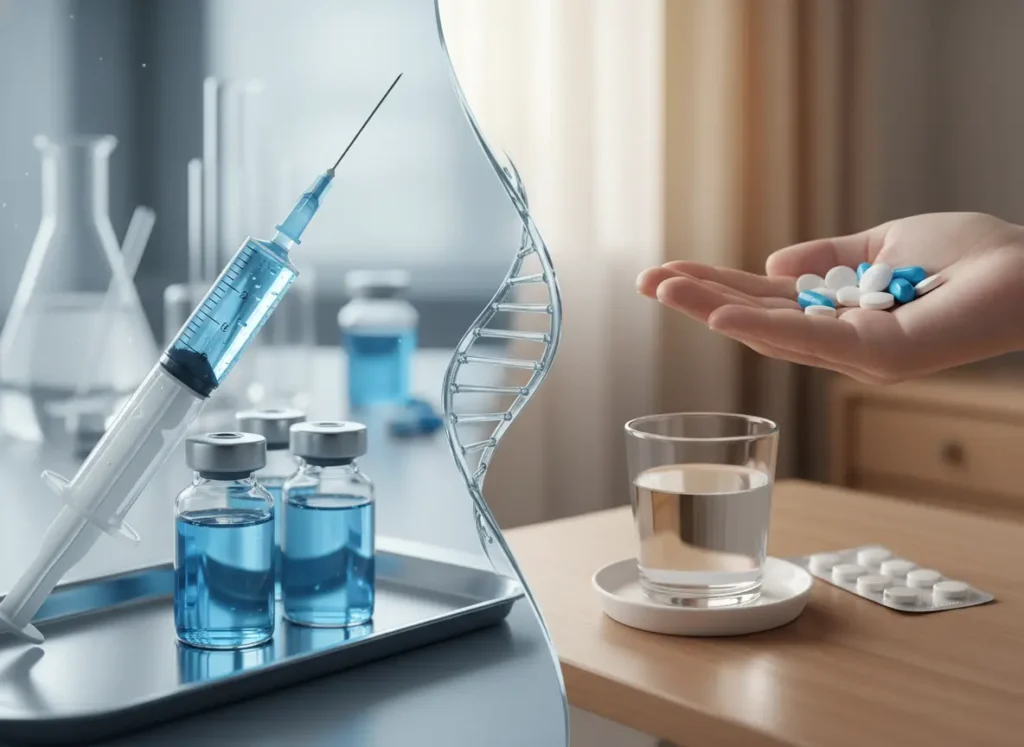
Injectable vs Oral BPC-157 Comparison
Each delivery method may fit different goals. A provider should help determine which option is appropriate.
| Factor | Injectable BPC-157 | Oral BPC-157 |
|---|---|---|
| Common Goal | Muscle, tendon, ligament, joint, or injury support. | Digestive and gastrointestinal support. |
| Delivery Route | Injected under provider guidance. | Taken as a capsule. |
| Convenience | Requires comfort with injections. | Easier for daily use. |
| Provider Guidance | Important for dose, route, and injection safety. | Important for quality, dosage, and suitability. |
Injectable BPC-157 for Injury Recovery and Targeted Support
Subcutaneous injections are often considered the commonly used when higher systemic availability is desired.
How Injectable BPC-157 Reaches the Body
Injections allow the peptide to enter the bloodstream rapidly. While BPC-157 is systemic (working throughout the body), many patients prefer injecting near an injury site (like a shoulder or knee) for potential localized benefits.
Why Injections Offer Higher BPC-157 Bioavailability
Because it bypasses digestion entirely, it bypasses digestion and may offer higher systemic availability.
When Injectable BPC-157 Is Commonly Used
Musculoskeletal injuries, tendonitis, post-surgical recovery, and severe joint pain.
Oral BPC-157 Capsules for Gut Health and Convenience
Oral BPC-157 offers a non-invasive alternative that is often discussed for specific wellness goals.
Why Oral BPC-157 Is Often Used for Digestive Support
Because BPC-157 capsules pass through the digestive tract, they come into direct contact with the stomach and intestinal lining. This makes them the commonly discussed for digestive support because it contacts the gastrointestinal lining.
Why Capsules Are Easier for Daily Use
For those with needle phobia or busy lifestyles, popping a capsule is far more convenient than preparing a syringe.
When Oral BPC-157 Is Commonly Used
Gastrointestinal issues, general inflammation, and maintenance protocols.
How to Choose the Right BPC-157 Treatment Plan
At Tucson Wellness MD, we don’t believe in a “one-size-fits-all” approach to peptide therapy. When you visit our clinic, we evaluate your medical history, your specific injury or inflammation markers, and your lifestyle goals to determine the correct path.
We source our peptides exclusively from licensed, U.S.-based compounding pharmacies. This ensures that whether you are prescribed injectable BPC-157 or oral capsules, you are receiving a quality-controlled product from licensed sources, not a questionable research chemical from the internet. Our doctors monitor your progress, adjusting dosages and delivery methods as your body heals. We ensure that your administration plan is personalized and medically supervised with your wellness objectives.
Related Peptide and Recovery Services
BPC-157 is one option within a broader provider-guided wellness plan. Patients interested in recovery, inflammation support, and regenerative care may also explore peptide therapy, regenerative medicine, stem cell therapy, NAD+ IV Therapy, and longevity care.
Choosing Between Injectable and Oral BPC-157
Choosing between injectable and oral BPC-157 doesn’t have to be a gamble. While injections often may support recovery goals for muscle and joint injuries, oral capsules are a convenient option for gut-focused support. Both methods have their place in a comprehensive regenerative medicine protocol.
At Tucson Wellness MD, we are committed to guiding you toward the administration method that offers the highest bioavailability for your unique needs. If pain or gut symptoms are affecting your daily life. Contact us today to schedule your consultation and discuss whether BPC-157 may fit your care plan from the inside out.
Need Help Choosing the Right BPC-157 Option?
If pain, injury recovery, inflammation, or gut symptoms are affecting your daily life, Tucson Wellness MD can help you discuss whether injectable or oral BPC-157 may fit into a personalized peptide therapy plan.
Schedule a Peptide ConsultationFrequently Asked Questions About Injectable vs Oral BPC-157
Which works better: injectable or oral BPC-157?
The better option depends on the condition being treated. Injectable BPC-157 is commonly preferred for tendon injuries, joint pain, and post-surgical recovery because it enters the bloodstream directly. Oral BPC-157 is often chosen for gut-related conditions since it comes into direct contact with the digestive tract. Many patients use one or both methods depending on their goals.
What is BPC-157 used for?
BPC-157 is commonly discussed in relation to tissue repair, recovery, and gastrointestinal support. It has gained attention for musculoskeletal injuries, inflammation, and gut health concerns. Different delivery methods are used depending on the target area. Treatment plans should be guided by a qualified provider.
Why is injectable BPC-157 used for injuries?
Injectable BPC-157 bypasses the digestive system and enters the bloodstream directly. This allows for more immediate systemic availability and the possibility of localized administration near an injury site. Because of this, it is often used for joint, tendon, and muscle recovery. The delivery method is chosen based on the type and severity of the condition.
Does oral BPC-157 work for gut health?
Yes, oral BPC-157 is commonly associated with gastrointestinal support. Since the capsules travel through the digestive tract, the peptide comes into direct contact with the stomach and intestinal lining. This makes it a preferred option for digestive concerns such as inflammation or irritation. Its stability in the stomach is what makes oral delivery possible.
What makes BPC-157 different from other peptides?
Most peptides break down quickly in stomach acid, which limits oral use. BPC-157 is considered unique because it is more stable in the digestive environment. This stability allows it to be used both orally and through injections. That flexibility is uncommon among peptides.
Is injectable BPC-157 better than oral BPC-157?
Injectable BPC-157 may be preferred when higher systemic availability or musculoskeletal support is the goal. Oral BPC-157 may be preferred for gut-focused support and convenience. The better option depends on symptoms, goals, comfort level, and provider guidance.
Can you take oral and injectable BPC-157 together?
Some patients may use both forms depending on their goals, but this should only be done with provider supervision. Combining delivery methods should be based on your treatment plan, dose, health history, and response to care.
Is BPC-157 FDA-approved?
BPC-157 is not FDA-approved for medical treatment. Patients should avoid unregulated products and speak with a qualified provider before considering peptide therapy.
Who should avoid BPC-157?
BPC-157 may not be appropriate for everyone. Patients who are pregnant, breastfeeding, managing cancer-related concerns, taking certain medications, or dealing with complex medical conditions should speak with a qualified provider first.