Healthy Fats Explained. How to Choose the Right Fats for Better Health
Do you blame fats for those stubborn pounds you can’t seem to shed? Or maybe you’re guilty of using them to amp up the flavor and texture of your food—perhaps a little too often? Should I try low-fat? No fat? We have all been there.
Fats are a type of macronutrient, which means they’re essential for your health in larger amounts. In fact, fats are the most energy-dense nutrient, providing 9 kcal per gram, while other macronutrients like protein and carbohydrates offer only 4 kcal per gram each. They play a key role providing fatty acids that assist in many important functions, like providing energy, supporting cell structure, and helping your body absorb fat-soluble vitamins. Dietary fats play an important role in overall health when consumed in appropriate amounts and balanced forms. They also have complex effects on your metabolism, influenced by factors like the type of fat, timing, and your individual body. Fats contribute to cell structure, hormone production, and energy storage as part of normal physiological function.
What Are Healthy Fats and Which Ones Should You Eat?
Unsaturated fats, including monounsaturated and polyunsaturated fats, are generally recommended in place of saturated and trans fats in many dietary guidelines including monounsaturated fats (found in olive oil, avocados, and nuts) and polyunsaturated fats like omega-3s (found in salmon, flaxseeds, and walnuts). These fats have been associated with cardiovascular health, cognitive function, and inflammatory regulation when included in a balanced diet.
Fats to limit include trans fats and excessive saturated fats, which are linked to increased LDL cholesterol and cardiovascular risk.
For optimal health:
- Choose olive oil, avocado oil, nuts, seeds, and fatty fish
- Limit fried foods and processed snacks
- Avoid products containing partially hydrogenated oils
The goal is not to eliminate fat entirely, but to select dietary fat sources that align with current nutritional guidelines and individual health needs.
Types of Fats
There’s no doubt that the types of fats you consume daily influence your body’s metabolism and affect your organs. You’ve probably been told that reducing saturated fats or sodium is essential if you’re at risk for heart disease. Let’s break down the different types of dietary fats so you can improve not only your heart health but your overall well-being. The Dietary Guidelines for Americans recommends that 20-35% of your daily calories come from fat, with a focus on limiting saturated and trans fats.
Saturated Fats
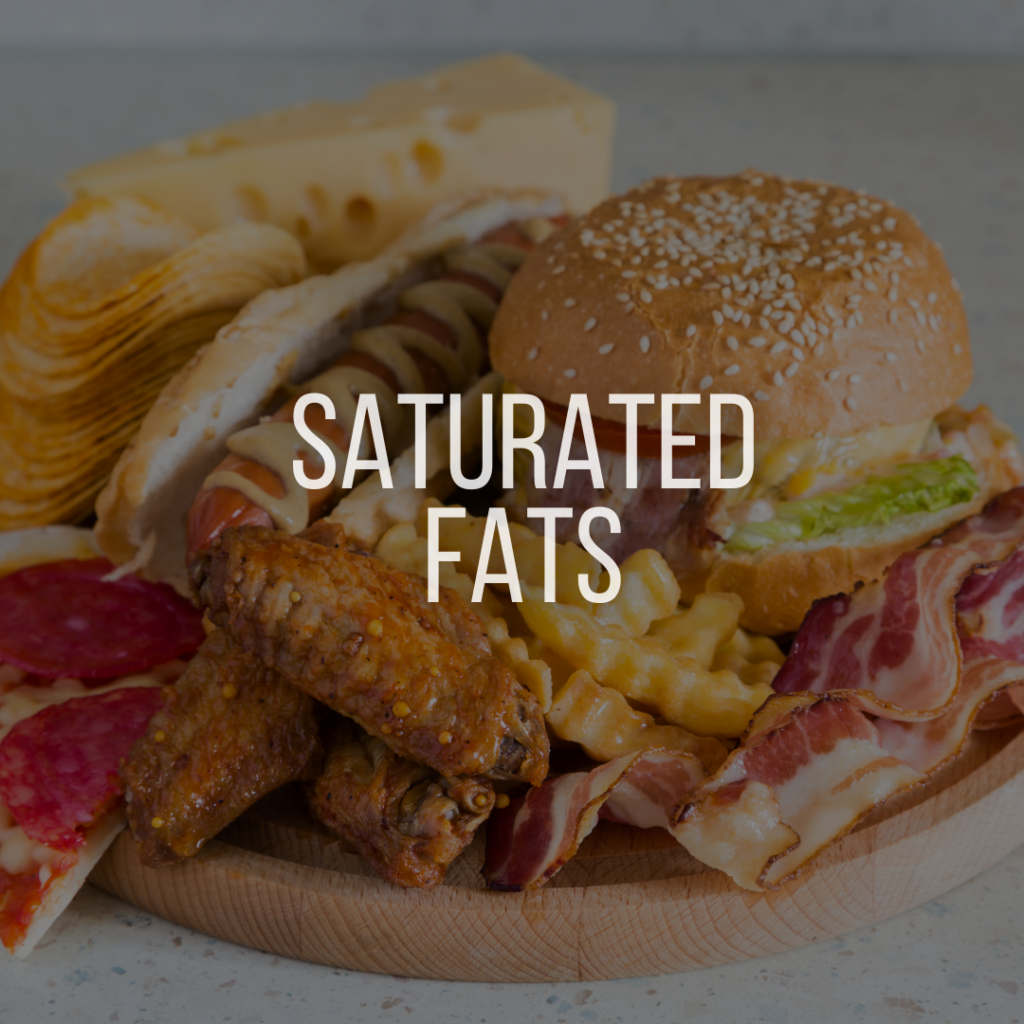
Solid at room temperature, think lard or butter, saturated fats are found in animal-based products like beef, pork, and high-fat dairy foods such as butter, margarine, cream, and cheese. They also sneak their way into many fast, processed, and baked foods, like cheesy pizza, decadent desserts, juicy hamburgers, and those irresistible cookies and pastries. While they can add rich flavor and texture to our meals, these fats have gained a bit of a bad reputation. When consumed in excess, they can affect your health, such as raising your LDL-cholesterol levels, which is a major contributor to heart disease.
Unsaturated Fats
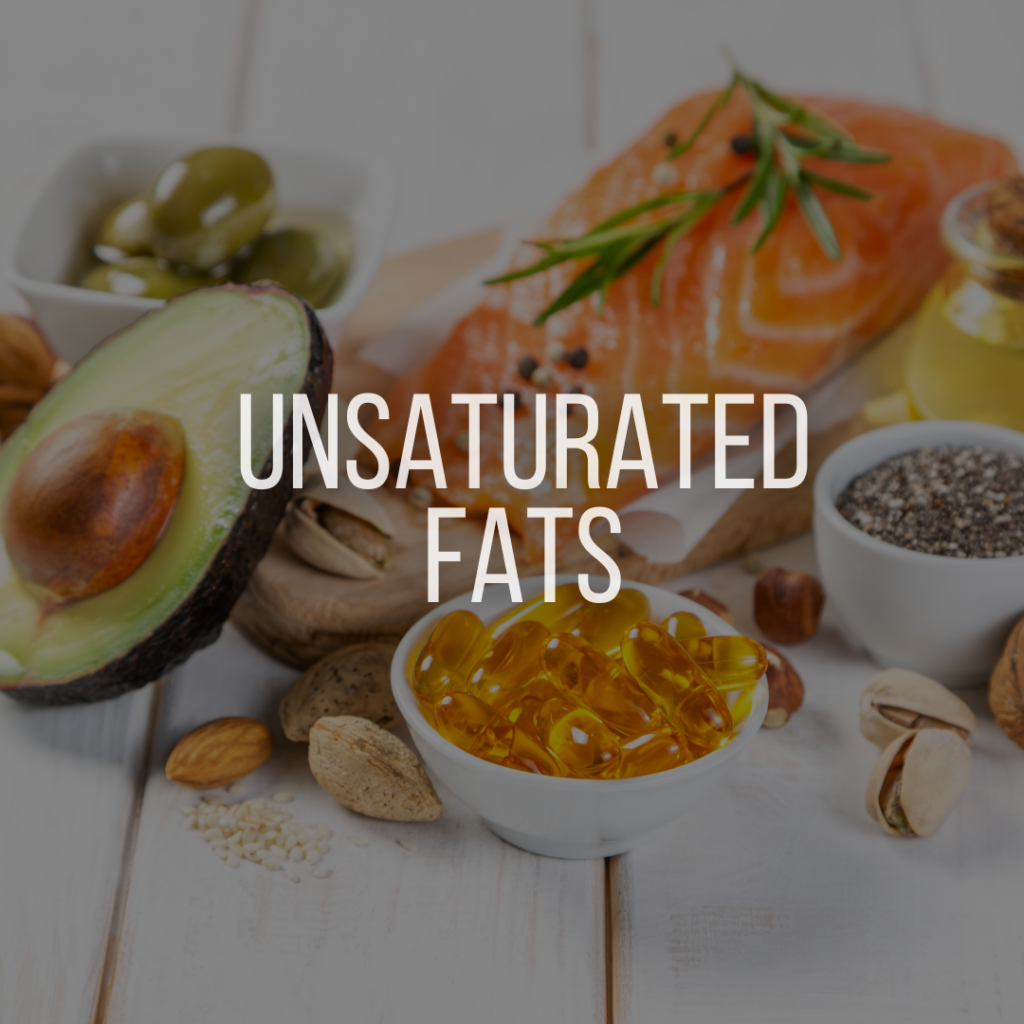
This is considered to be the healthy kind, and there are two types: monounsaturated and polyunsaturated. Monounsaturated fats (MUFA) are found in a variety of foods, including avocados, peanut butter, and nuts like almonds, hazelnuts, cashews, and pecans. They’re also present in seeds such as pumpkin, sesame, and sunflower, as well as in plant oils like olive, peanut, safflower, sesame, and canola oils. Diets higher in monounsaturated fats have been associated with favorable lipid profile patterns in some populations.
Omega-9s are a specific type of MUFA, and are especially known for their heart-healthy benefits. One of the most common sources of omega-9s is olive oil, which is high in oleic acid. Although omega-9s are beneficial for your health, they are not considered essential because your body can produce them as needed.
Polyunsaturated fats (PUFAs) include essential fatty acids, such as omega-3 and omega-6 fatty acids. These healthy fats are found in plant-based oils like soybean, corn, and safflower oils, as well as in foods like walnuts, flaxseeds, sunflower seeds, and fatty fish such as salmon, mackerel, herring, tuna, and trout. Polyunsaturated fats, particularly omega-3 fatty acids, are associated with brain health, cardiovascular function, and inflammatory balance.
The three main omega-3 fatty acids—alpha-linolenic acid (ALA), eicosapentaenoic acid (EPA), and docosahexaenoic acid (DHA)—each play important anti-inflammatory roles. ALA is considered a precursory for DHA and EPA but the conversion rate is slow. This nutrient is primarily found in plant oils like flaxseed, soybean, and canola oils, while EPA and DHA are mainly found in fish and other seafood. Omega-6s provide essential benefits like energy, maintaining healthy cell membranes, supporting skin health, regulating metabolism, and contributing to brain function. One key omega-6 fatty acid is linoleic acid (LA), which is commonly found in seed oils, as well as nuts and seeds. Maintaining a balanced intake of omega-6 and omega-3 fatty acids is generally recommended in dietary guidelines.
Trans Fats

Categorized as an unsaturated fat, Trans fats are widely recognized as being associated with increased cardiovascular risk and are recommended to be minimized or avoided, similar to saturated fats, that should be avoided due to their negative impact on metabolic health. Trans fat consumption has been associated with increased risk of cardiovascular disease and metabolic disorders. Trans fats are created when vegetable oils—normally liquid at room temperature—undergo a process called partial hydrogenation. This chemical transformation turns the oils into a solid form at room temperature, which extends the shelf life of products for manufacturers. Unfortunately, this process comes at a cost to our health. Today, many packaged and processed foods contain trans fats, including fried foods, baked goods like cookies and pies, crackers, margarine, frozen desserts, and even candy bars.
Shop Smarter for Your Health
Often, low-fat products still contain filler carbs in the form of sugar to make up for the loss of flavor and texture. So, if a product is labeled ‘low-fat,’ be sure to check the ingredients for terms like ‘syrup,’ ‘sweetener,’ or anything ending in ‘-ose,’ as these are often signs of hidden sugars. When it comes to avoiding harmful fats, steer clear of foods that list ‘partially hydrogenated oils’ (PHOs) on the label, as these are a source of trans fats, which should be limited for optimal health.
Navigating ingredient labels can be tricky, but it’s important to make informed choices. Always try to avoid products with long, complicated ingredient lists that are hard to pronounce—these often indicate highly processed foods with additives and preservatives that may not be ideal for your body.Choosing minimally processed foods may help support balanced dietary patterns.
Experience Your Best Self with Tucson Wellness MD
We want you to love yourself, so focus on nourishing your body with healthy fats. Making informed dietary choices may contribute to overall health and wellness as part of a comprehensive lifestyle approach. If you’re looking to achieve your ideal weight and boost your energy, Our weight loss services are designed to provide structured guidance tailored to your health goals and medical profile. If you’re looking for nutritional support and guidance, don’t hesitate to reach out! Schedule a consultation today. At Tucson Wellness MD, we take pride in specializing in longevity and holistic wellness. Our approach is all about helping you live a vibrant, healthy life that lasts longer. Remember, today is the perfect day to start living better, for longer.
Frequently Asked Questions
What are healthy fats?
Healthy fats are unsaturated fats, including monounsaturated and polyunsaturated fats. These are commonly found in foods like olive oil, avocados, nuts, seeds, and fatty fish.
What fats should be avoided?
Trans fats should be minimized or avoided. These are often found in processed foods, baked goods, and products containing partially hydrogenated oils.
Do healthy fats support heart health?
Unsaturated fats, especially omega-3 fatty acids, are associated with cardiovascular health and balanced inflammatory response when part of a healthy diet.
What are omega-3 and omega-6 fatty acids?
These are types of polyunsaturated fats. Omega-3s support heart and brain health, while omega-6s support energy, skin health, and cellular function. Balance between the two is important.
STAY HEALTHY – STAY CONNECTED