Ipamorelin vs Sermorelin: Which Peptide Fits Your Goals?
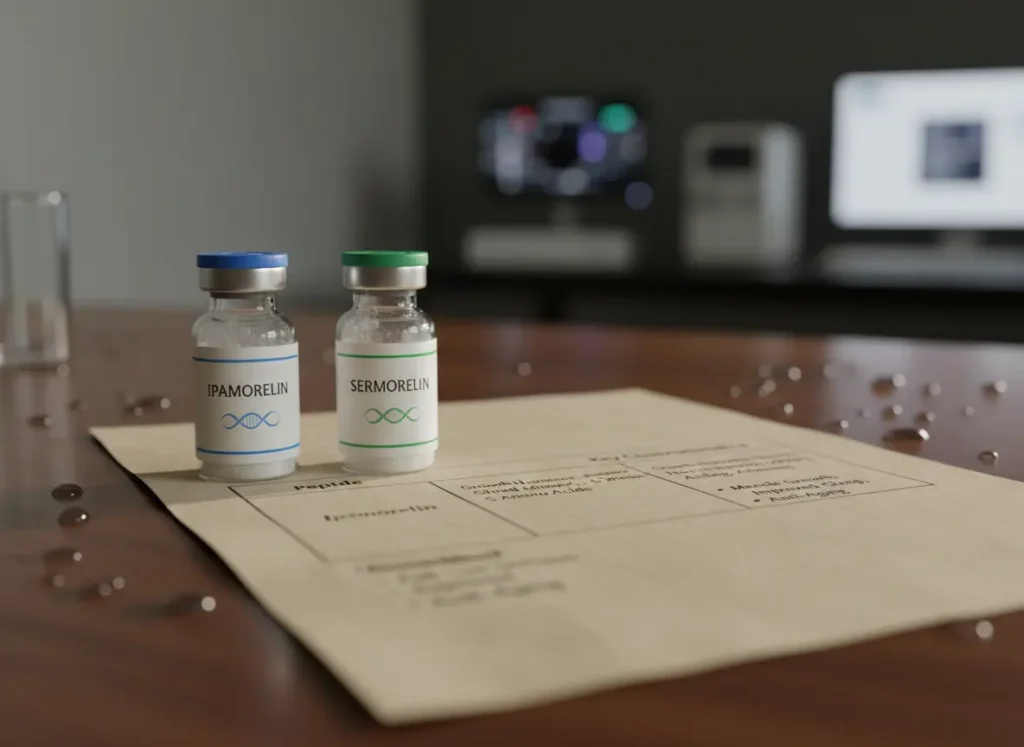
If you are exploring peptide therapy for aging support, fat loss, or recovery, two names tend to come up early: ipamorelin and sermorelin.
Both peptides help your body increase natural growth hormone production. However, they work through different mechanisms and are used for different outcomes.
Understanding those differences helps determine which option aligns better with your goals and in some cases, whether a combination makes sense.
What Is Sermorelin?
Sermorelin is a synthetic form of growth hormone–releasing hormone (GHRH). It mimics a hormone your body already produces and signals the pituitary gland to release growth hormone.
Sermorelin is commonly used for:
- Supporting sleep quality
- Improving daily energy
- Assisting metabolic health
- Long-term anti-aging support
Sermorelin is typically administered as a nightly injection. Because it works by restoring natural signaling, results develop gradually over weeks to months.
Side effects are generally mild and may include temporary injection-site irritation or occasional headaches.
What Is Ipamorelin?
Ipamorelin is a growth hormone–releasing peptide (GHRP). Instead of mimicking GHRH, it binds to ghrelin receptors, triggering short, controlled pulses of growth hormone release.
A key distinction is that ipamorelin does not significantly increase cortisol or prolactin levels, which improves tolerability for many patients.
Ipamorelin is commonly used for:
- Faster muscle recovery
- Fat loss and body composition changes
- Preserving lean muscle mass
- Supporting skin and tissue repair
It is usually taken once or twice daily and often produces noticeable effects sooner than sermorelin.
Ipamorelin vs Sermorelin: Side-by-Side Overview
| Feature | Sermorelin | Ipamorelin |
| Peptide Type | GHRH analog | GHRP |
| Primary Action | Stimulates natural GH release via pituitary | Triggers GH pulses through ghrelin receptors |
| Best Suited For | Anti-aging, sleep, long-term hormone balance | Fat loss, recovery, performance |
| Speed of Results | Gradual | Faster |
| Typical Dosing | Nightly injection | Once or twice daily |
| Side Effects | Mild, usually injection irritation | Mild, generally well tolerated |
| Treatment Style | Steady, long-term support | Shorter-acting, more immediate effects |
This comparison helps clarify why one peptide may be preferred over the other depending on goals.
Sermorelin vs Ipamorelin: Key Benefits
Sermorelin is often selected for long-term wellness goals. It supports gradual improvements in sleep, energy, and overall hormonal balance, particularly in age-related decline.
Ipamorelin is commonly chosen for performance-driven goals. Patients seeking faster recovery, improved body composition, or more noticeable early changes often respond well to ipamorelin.
Who May Benefit More From Sermorelin?
Sermorelin may be a better fit if you:
- Experience poor sleep or age-related fatigue
- Prefer slower, steady hormone support
- Focus on longevity and anti-aging rather than performance
Who May Benefit More From Ipamorelin?
Ipamorelin may be appropriate if you:
- Are focused on fat loss and muscle preservation
- Maintain an active or athletic lifestyle
- Want faster recovery and earlier results
Can Ipamorelin and Sermorelin Be Used Together?
Yes. In some cases, providers prescribe both peptides together.
Combination therapy may allow patients to benefit from sermorelin’s steady, long-term effects while also gaining ipamorelin’s faster recovery and body composition support.
This approach requires medical oversight to ensure dosing, timing, and monitoring are appropriate.
Long-Term Safety and Treatment Outcomes
Both peptides are generally well tolerated when prescribed and monitored appropriately.
Sermorelin tends to deliver gradual improvements over months, particularly in sleep quality and energy. Ipamorelin often produces earlier changes in recovery and fat metabolism.
Long-term success depends on individualized dosing, lifestyle factors, and ongoing provider guidance.
Choosing the Right Peptide Therapy
There is no single best peptide for everyone.
If your goal is steady anti-aging support and sleep improvement, sermorelin may be the better option. If you are seeking faster fat loss, recovery, or performance support, ipamorelin may be more appropriate.
Some patients benefit most from a supervised combination based on their health profile.
Peptide Therapy at Tucson Wellness MD
At Tucson Wellness MD, peptide therapy is tailored to the individual.
We do not use one-size-fits-all protocols. Every plan is built around your health history, lab results, and goals, whether that involves sermorelin, ipamorelin, or a combination approach.
Our focus is safety, sustainability, and measurable results.
FAQs: Ipamorelin vs Sermorelin
Which peptide is safer?
Both peptides are considered safe when prescribed and monitored. Sermorelin has a longer history of use, while ipamorelin is known for its favorable hormone profile. Safety depends on individual health factors.
Can ipamorelin and sermorelin be stacked?
Yes, in select cases. Stacking should only be done under medical supervision to ensure appropriate dosing and timing.
How quickly does ipamorelin work?
Many patients notice improvements within weeks, particularly in recovery and energy levels.
How does tesamorelin compare to ipamorelin?
Tesamorelin is more targeted toward visceral fat reduction. Ipamorelin offers broader benefits related to recovery, fat loss, and muscle preservation.
What about ipamorelin vs CJC-1295?
Ipamorelin supports recovery and fat loss. CJC-1295 is often used for longer-term muscle growth and anti-aging. Some protocols combine both.